
Last updated September 10, 2026
Full 25-point door and opener safety check with every visit - springs, cables, rollers, tracks, and your LiftMaster or Chamberlain opener included
You get a price before we start. It does not change when the truck arrives.


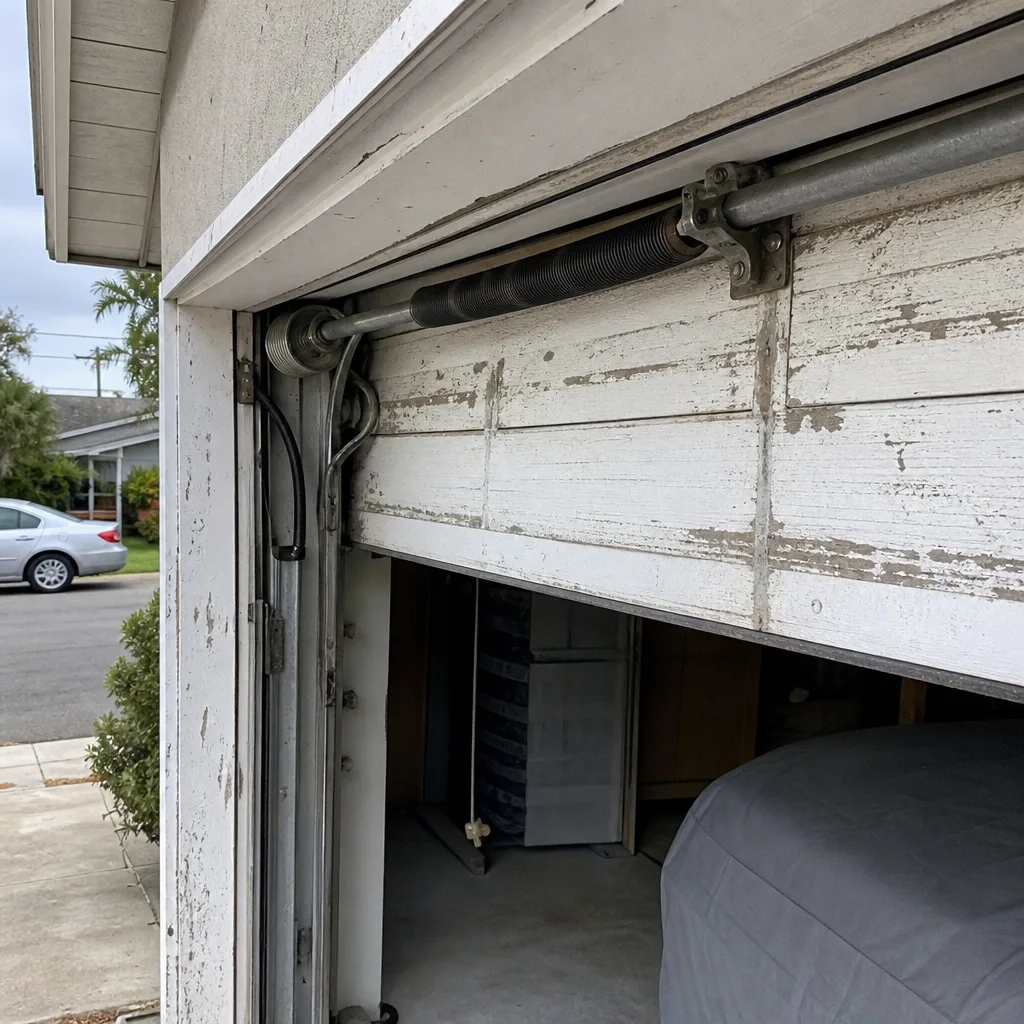 Before
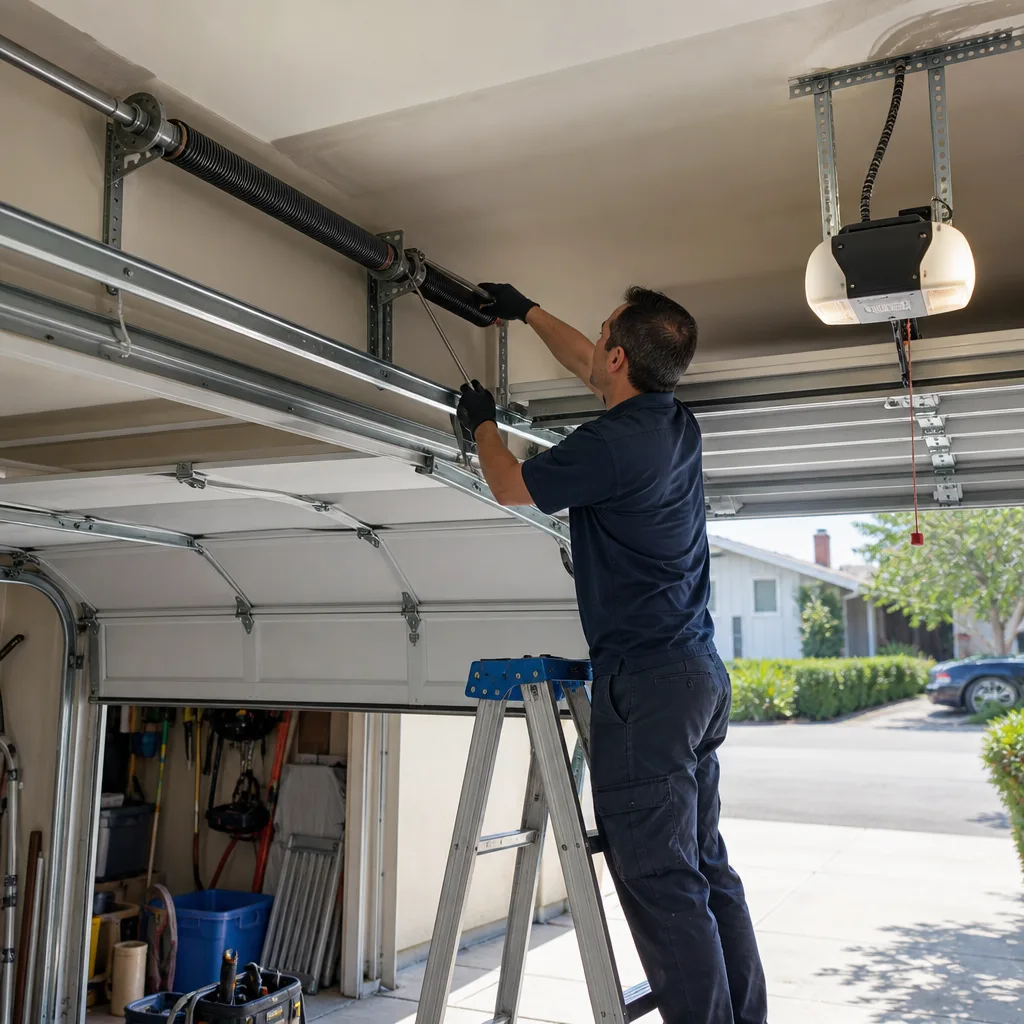 After
After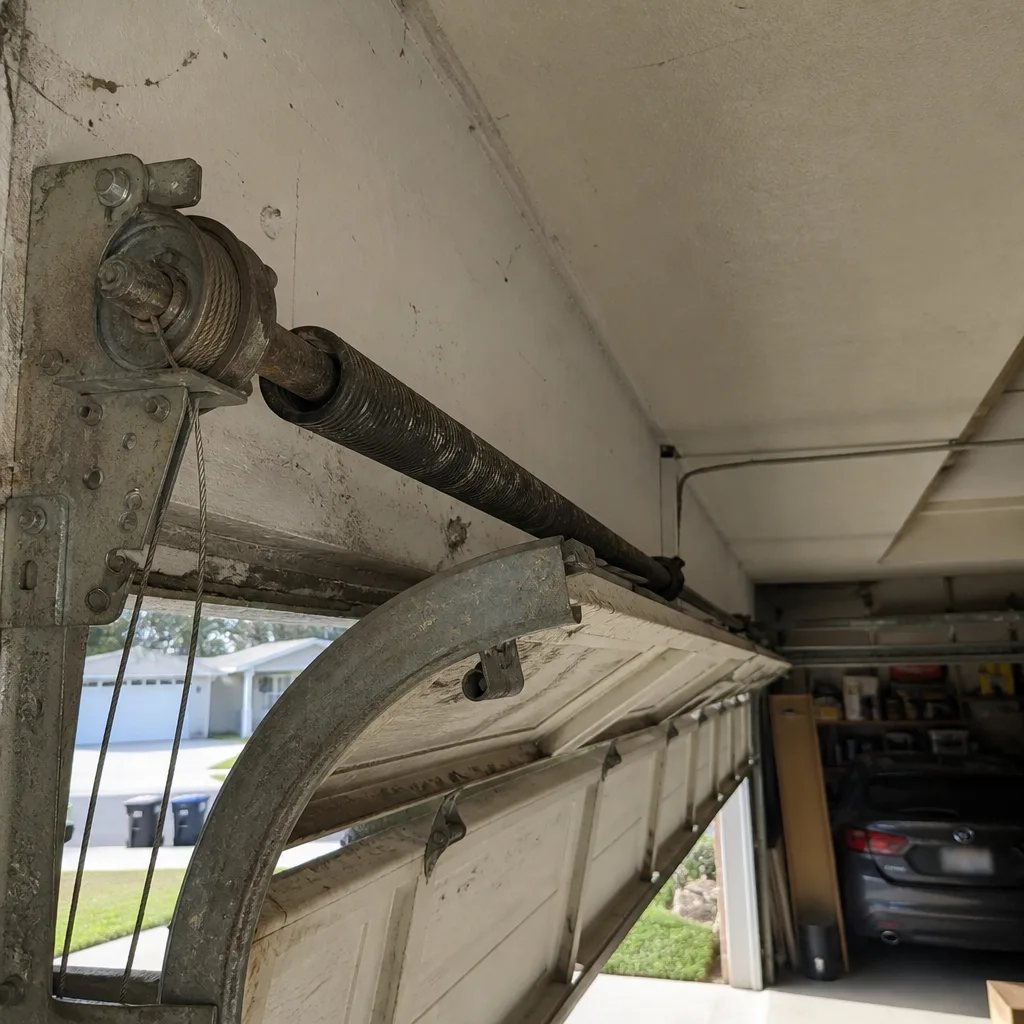 Before
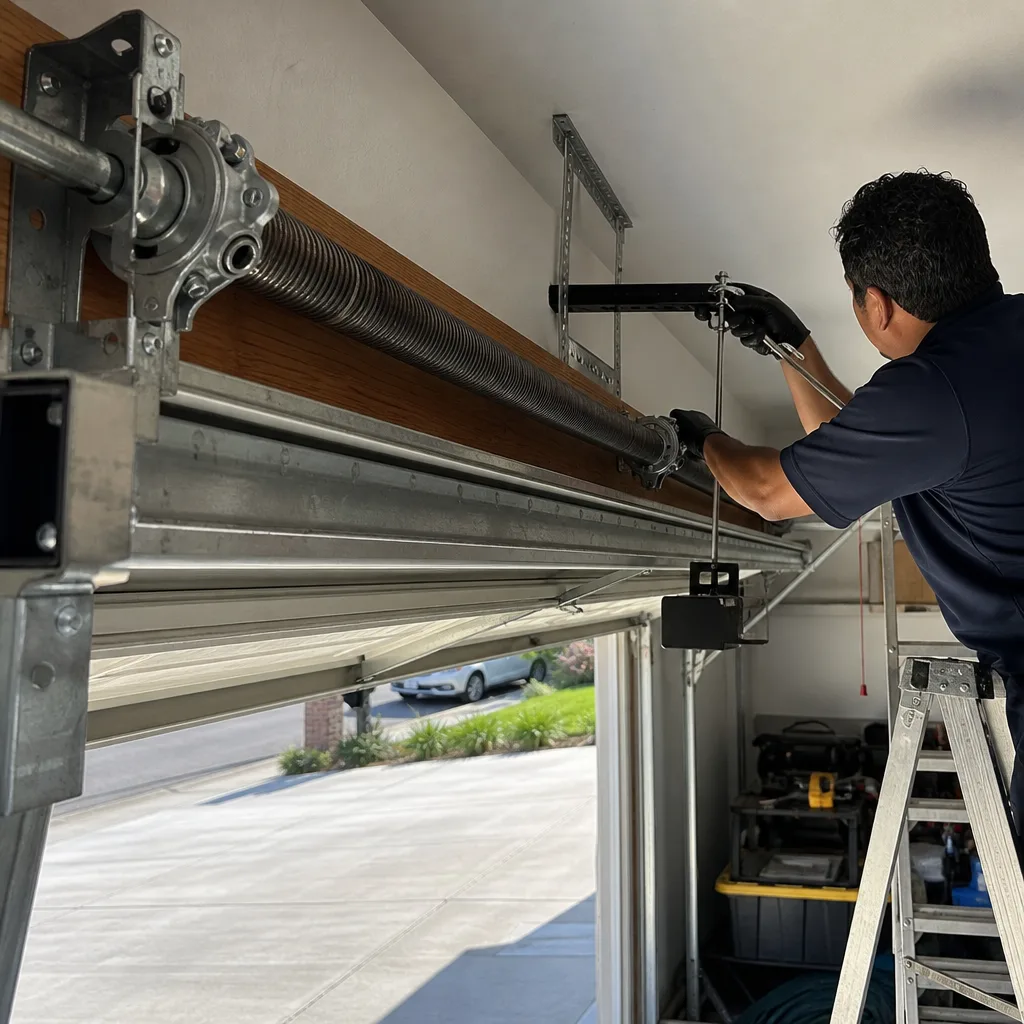 After
After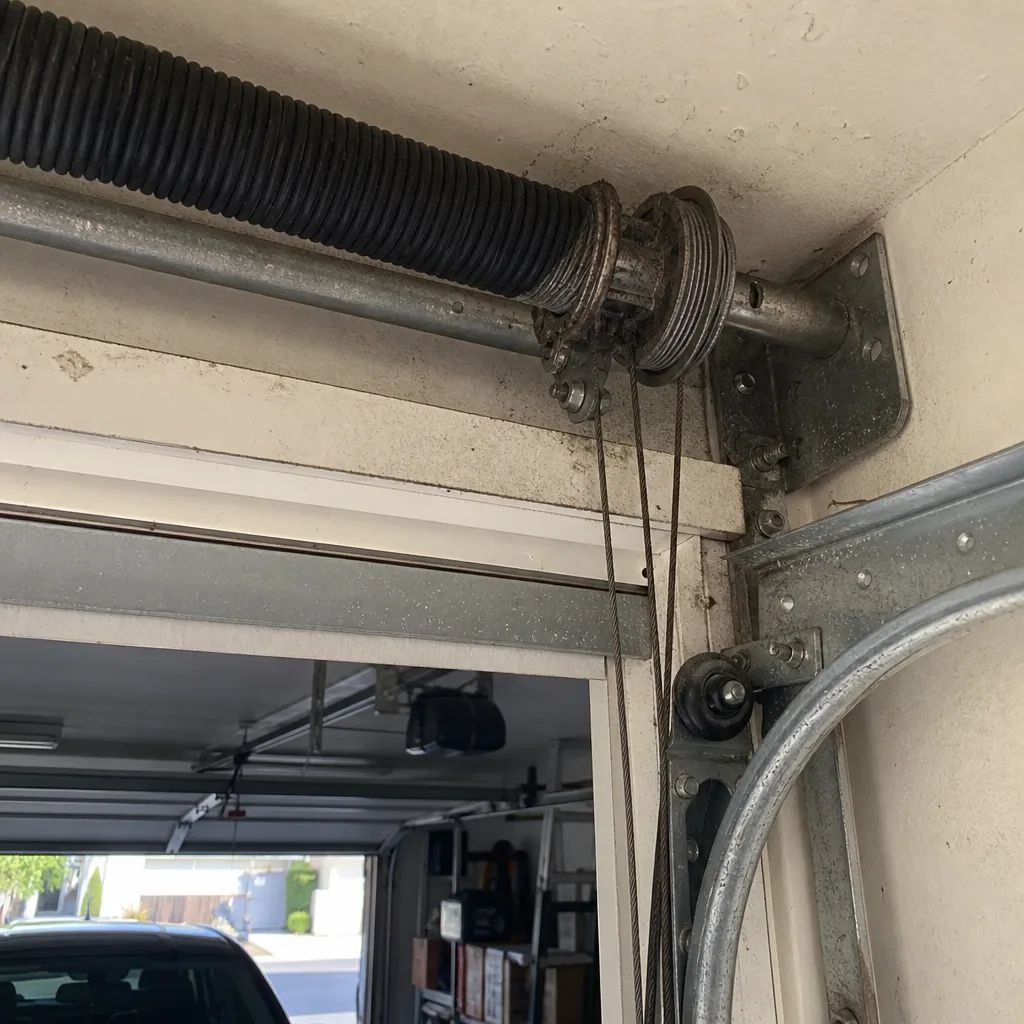 Before
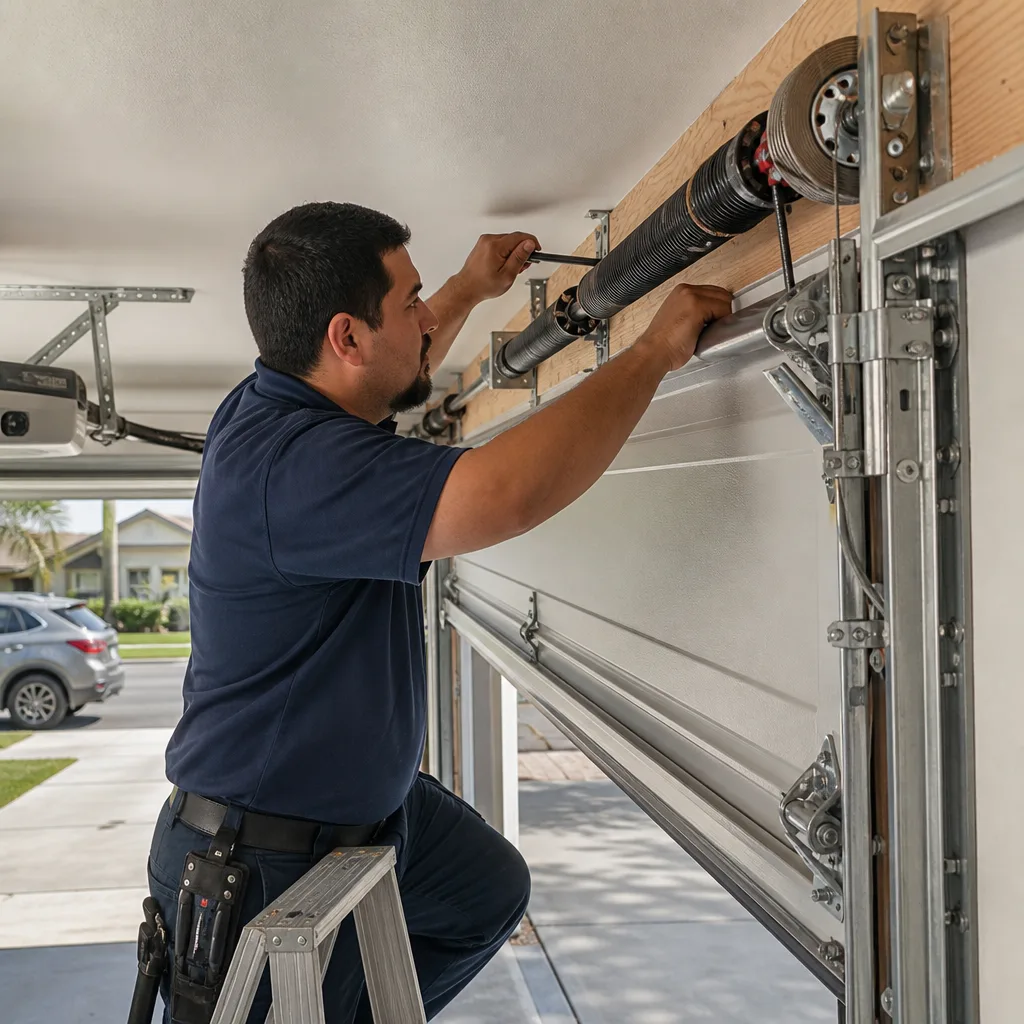 After
AfterGarage Door Repair Maintenance Checklist for Huntington Beach Homeowners
Most maintenance checklists for garage doors read like they were written in Ohio and shipped west without a second thought. The problem is, Huntington Beach isn’t Ohio. We get salt fog rolling off the Pacific, June Gloom humidity that lingers for weeks, Santa Ana winds that blast dust into every hinge, and summer heat that makes metal expand and contract on a daily cycle. Your garage door lives in that environment 365 days a year. The tasks are the same on paper; what you’re actually looking for, and how often you need to check it, is different here. This guide covers the Huntington Beach-specific maintenance routine we’ve developed over 21 years of working on doors from Sunset Beach to the Wetlands, and everything in it will save you money. For more guides & resources, explore our blog.
Quick Answer
A garage door maintenance checklist for Huntington Beach should be followed quarterly, not annually, because salt air corrodes hardware at roughly twice the rate seen in inland Orange County. The core tasks are: lubricating rollers, hinges, and springs with a silicone-based lubricant; testing the door balance; checking for rust on bottom brackets, cable drums, and the torsion shaft; and tightening every bolt you can see. Most homeowners can handle lubrication and inspection safely, but spring tension, cable replacement, and opener limit adjustments require a Garage Door Repair professional’s tools and experience.
Table of Contents
- Why Huntington Beach’s Climate Changes Your Maintenance Schedule
- The Month-by-Month Huntington Beach Maintenance Calendar
- Where Salt Air Attacks First: The Critical Hardware Points
- Lubricant Choice in Coastal Climates: What Actually Works
- The Two-Minute Door Balance Test
- What You Can Safely Do Yourself vs. What Needs a Pro
- Common Mistakes to Avoid
- When to Call a Professional
- Frequently Asked Questions
Why Huntington Beach’s Climate Changes Your Maintenance Schedule
Huntington Beach sits in a narrow coastal band where the air carries more than just moisture. It carries salt. Every day, especially in the late afternoon when the sea breeze pushes inland, a fine salt mist settles on everything within a few miles of the ocean. If you live west of the 405, your garage door hardware is being gently sandblasted by salt particles that accelerate rust and corrosion. East of the 405, you get less salt but more heat stress in summer, particularly in the inland neighborhoods around Westminster and Fountain Valley. Both conditions demand more frequent attention than a generic national checklist suggests.
The humidity cycles here are also unusual. June Gloom brings weeks of overcast, damp air that never quite rains but keeps metal surfaces perpetually wet. That constant moisture, combined with salt, creates ideal conditions for what we call creep corrosion: rust that starts inside a roller housing or behind a bracket and spreads unseen. By the time you notice it, the component has already weakened. Then come the Santa Ana winds in fall, which whip through gaps in the door and deposit abrasive dust into the tracks and hinges. And in August and September, the inland heat pushes temperatures high enough that metal components expand measurably, which is when we see track misalignment begin in doors that were installed with too little clearance.
This is why we recommend a quarterly visual inspection for Huntington Beach homeowners, with two of those inspections focused on the specific conditions the seasons bring. A homeowner in Riverside might get away with an annual check. Here, four times a year is the difference between catching a rusty bottom bracket and replacing an entire door panel that tore off when the bracket finally failed.
The Month-by-Month Huntington Beach Maintenance Calendar
This schedule is built around what we actually see in Huntington Beach service calls, not around a generic four-season template. The tasks are sequenced by the specific failure patterns this climate produces.
January: The Post-Holiday Check
The garage has been working harder through the holidays. Boxes, bikes, cars in and out more often than usual. January is when you want to walk around the door and look for any new marks or wear on the track, any unusual gaps at the top or bottom of the door, and any bolts that have loosened from the busier-than-normal use. Tighten the corner brackets and the bolts on the track with a socket wrench. Check the rubber weather strip at the bottom for cracks, because winter rain in Huntington Beach, while modest, still finds its way under a worn seal.
March/April: The Pre-June Gloom Deep Clean
Before the damp season arrives, clean the tracks and remove any accumulated dust from the roller hardware. Use a damp cloth on the inside of the tracks, then dry them thoroughly. This is the time to apply a fresh coat of lubricant to the rollers, hinges, and springs, before the humidity locks in any existing moisture. We also recommend checking the opener’s safety sensors at this time: wipe the lenses clean and make sure the sensor brackets haven’t been knocked out of alignment by the frequent door use of the holiday season.
June/July: The June Gloom Rust Inspection
During the months when the marine layer hangs around, do a focused rust inspection. Look at the bottom brackets, the cable drums, the torsion shaft, and the spring coils. If you see bright orange powder forming, that’s the early stage of salt-driven oxidation. Wipe it away with a dry cloth and inspect whether the metal has pitted. If pitting is present, the component is compromised and needs replacement sooner rather than later. This is also the time to check if the door is making a grinding sound when it opens, which often means the rollers are no longer rolling smoothly on their bearings because salt has started to eat the bearing surfaces.
September/October: The Post-Summer and Pre-Santa Ana Check
After the summer heat, check the alignment of the door. Run the door up and down and watch the gap between the track and the roller on each side. If one roller is tighter against the track than the others, the track has shifted. This is a common aftereffect of summer heat expansion. Before the Santa Ana winds arrive, check the gaps around the outside of the door for dust accumulation. Santa Ana winds will push fine dust into every opening, and dust inside the track or on the rollers acts like sandpaper, accelerating wear.
Where Salt Air Attacks First: The Critical Hardware Points
In our experience working doors in Huntington Beach, salt air has a specific attack order. It doesn’t hit everything evenly. If you know where it strikes first, you can check those spots more carefully and more often.
The bottom brackets. These are the L-shaped metal pieces that hold the bottom rollers and the lift cable ends. They sit closest to the ground, where moisture settles, and they’re constantly exposed to any salt spray that comes under the door. What “checking” actually means: get down at eye level with the bracket and look for a ridge of rust forming where the bracket meets the door panel. This rust pushes the bracket away from the panel, which misaligns the cable and eventually causes the cable to jump off the drum. Touch the bracket. If the metal feels flaky or you can see bubbling paint, the bracket is already losing its structural integrity.
The torsion shaft. This is the horizontal shaft above the door opening where the springs sit. In coastal Huntington Beach, especially in homes within half a mile of the beach, this shaft is constantly bathed in salt-laden air. Check for a uniform coat of dark oxidation. A light dusting of surface rust is normal; pitting and flaking are not. If you tap the shaft with a small screwdriver and small flakes of rust fall off, the shaft wall is thinning.
The cable drums. These are the spools at each end of the torsion shaft where the lift cables wind and unwind. Look for rust forming inside the cable groove. When rust forms there, it creates tiny burrs that cut the cable strands over time. A frayed cable in this groove is the first thing that snaps on a Sunday morning when the door is holding all its weight. Check for any metal slivers or bright orange dust around the drum after the door goes up and down. If you see that, the drum is actively eating the cable.
Lubricant Choice in Coastal Climates: What Actually Works
Most national garage door maintenance articles tell you to lubricate your rollers and hinges once a year with a garage door lubricant, without explaining why or what kind. In Huntington Beach, the kind of lubricant matters as much as the frequency, because the salt-laden air reacts with certain types of grease and makes them worse than no lubricant at all.
Silicone-based spray lubricants are the best choice for coastal garage door hardware. They displace moisture, don’t attract dust, and create a thin, non-greasy film that resists salt air penetration. Look for a product labeled specifically for garage doors or metal-to-metal contact in humid environments. Apply it to the rollers (at the point where the roller meets the shaft), the hinges (each pivot point), the torsion spring coils, and the opener rail. Two to three light passes per component is enough.
Lithium grease is a heavier, creamier lubricant that works fine inland, but in Huntington Beach it has a problem: it’s tacky. Salt-laden dust and sand stick to it, and before long the grease has turned into a mild abrasive paste. If you already have lithium grease on your hinges from a previous owner, clean it off with a degreaser and switch to a silicone spray. We see this in neighborhoods from Bolsa Chica to south Huntington, where doors near the beach accumulate a gritty gray sludge on their hinges after a single spring of lithium application.
White grease, the kind sold as marine grease, is even worse for this application. It’s designed for boat trailers and other high-wash environments, not for the constant salt mist of a garage door. It holds salt, it hardens in the heat of summer, and it attracts every bit of grit. Skip it entirely for the moving parts of your door.
One more coastal note: don’t lubricate the track itself. Tracks are meant to be dry. Lubricant in the track collects dust and salt, and the rollers should be rolling, not sliding, through them. If your rollers are sliding instead of rolling, that’s a sign the roller bearings are already compromised and you need new rollers, not new grease.
The Two-Minute Door Balance Test
Here is the single most useful test you can do on a garage door, and it takes two minutes. It tells you whether your springs are still providing the correct counterbalance for your door’s weight. Most garage door springs in Huntington Beach are rated for a specific number of cycles (open and close), usually between 10,000 and 20,000 for torsion springs. When a spring starts to weaken, it doesn’t give you a warning light. The door just gets heavier, and your opener works harder, and then one Saturday afternoon the cable snaps because the door’s full weight transferred to the cable instead of the spring.
- Close the door and disconnect the opener. Pull the red emergency release cord hanging from the opener rail. This disconnects the door from the opener carriage so you’re testing the door alone.
- Lift the door manually by its handle. It should lift smoothly, without a struggle, and with roughly the same resistance all the way up. You should be able to lift it with one hand.
- Let the door go at waist height. A properly balanced door will hold its position or drift down very slowly. If the door drops to the ground with any speed, the springs are not holding their share of the weight. You now know your springs are outside the 10 percent tolerance.
- Run the door up to the fully open position and let go. If it stays open, the top of the travel range is also balanced. If the door creeps back down, the springs are weak across their entire range.
If the door fails either part of this test, do not wait. The door is putting unnecessary strain on the opener gear every time you use it, and the cable is now the only thing preventing the door from coming down unexpectedly. That’s a dangerous condition. A spring job in Huntington Beach is a measured, scheduled repair; a cable snap never happens at a convenient time.
What You Can Safely Do Yourself vs. What Needs a Pro
A garage door is a 200-pound panel riding on two springs that store enough energy to lift that panel hundreds of times. Respect that. There is a line between what a careful homeowner can handle and what requires a trained person with the right tools.
Safe to Do Yourself
- Visual inspection. Walk around the door, look at the rollers, hinges, brackets, cables, and track. Note anything that looks bent, rusted, or loose.
- Lubrication with a silicone spray. Rollers, hinges, torsion springs, opener rail. Keep the spray away from the tracks.
- Tightening visible bolts and screws. Track brackets, corner brackets, and hinge bolts come loose over time. A socket wrench and ten minutes will fix most of those.
- Cleaning the safety sensor lenses. A soft cloth on the small glass eye of the sensor on each side of the door opening. This fixes half the “opener won’t close” calls we get.
- Testing the auto-reverse safety feature. Place a 2×4 flat on the ground under the door’s path, then close the door. It should reverse within a second of touching the wood. If it doesn’t, call a professional.
Do Not Do These Yourself: The Three Dangerous Jobs
Spring tension adjustment or replacement. Torsion and extension springs are under high tension at all times. The winding bars used to adjust them can slip and strike with enough force to break bone or worse. The risk is not theoretical. We have seen the aftermath of DIY spring attempts in Huntington Beach garages, and it’s why we always tell homeowners: a spring is not a hardware-store project.
Cable replacement. The lift cables run through the torsion system and carry tremendous tension when the door is up. If a cable is frayed, it needs to be replaced before it snaps, but the replacement requires releasing the spring tension properly. Doing it wrong turns the cable into a whip. This is a professional job, full stop.
High-cycle opener adjustment or replacement. Openers have limit switches, force settings, and safety reversal circuits. When the opener starts slamming the door down, or reverses before reaching the floor, or refuses to close at all, most people assume the opener is bad. Often it’s not. The problem is a door balance issue or a sensor misalignment. Diagnosing that requires bypassing safety circuits, which is where the danger lives. Call Garage Door Opener in Huntington Beach expertise before replacing an opener that may not be the actual problem.
Common Mistakes to Avoid
- Using WD-40 as a garage door lubricant. WD-40 is a water displacer, not a lubricant. It actually strips away the existing lubricant and leaves metal surfaces more vulnerable to the salt air in Huntington Beach. If you’ve been using it, clean the components and reapply a silicone-based product.
- Oiling the track. Tracks are dry-slide surfaces. Oil or grease in the track picks up salt and sand and turns into a grinding paste. In coastal neighborhoods near the bluffs, we see this mistake more than anywhere else.
- Ignoring a noisy door because it “still works.” A grinding, squealing, or popping sound is the door telling you a specific component is failing. What starts as a $40 roller replacement in Huntington Beach can become a $600 track and bracket repair if the roller seizes and jumps the track while the door is mid-cycle.
- Skipping the balance test. The two-minute test above is free and easy. Skipping it means you’ll only discover weak springs when a cable snaps, which is the most expensive and least convenient way to find out.
- Replacing the opener before checking the door balance. If the door is heavy because the springs are weak, the opener has to work harder. The opener isn’t the problem; the springs are. A new opener on a heavy door will burn out its gear in a year. Check the balance first.
- Using white lithium grease on coastal doors. Lithium grease is an inland product. On a Huntington Beach door within a few miles of the coast, it attracts salt-laden dust and turns into an abrasive paste that wears out hinges faster than no grease at all.
- Waiting until the door stops working to call someone. Maintenance is cheaper than repair, always. A quarterly inspection catches a $50 bracket before it becomes a $500 panel replacement. The old “if it ain’t broke, don’t fix it” approach costs more in the long run, especially in a salt air climate.
When to Call a Professional
Call a professional when the door fails the balance test, when you see rust flakes falling from the torsion shaft or cable drums, when the cables are frayed or loose, when the opener is making a grinding sound or reversing without hitting anything, or when the door comes down with a visible bang. Any of these means a safety-critical component has already failed or is about to. Huntington Beach’s salt air doesn’t reverse itself; the damage compounds. A spring or cable replacement done immediately is a scheduled 90-minute visit, not an emergency call at night. Otto’s Garage Door offers free estimates in Huntington Beach - call (714) 650-8648 and someone will quote the job over the phone and hold that number at the door.
Frequently Asked Questions
A Huntington Beach-specific checklist includes lubricating rollers, hinges, and springs with silicone spray every quarter; testing door balance every quarter; inspecting bottom brackets, cable drums, and the torsion shaft for salt corrosion; tightening all visible bolts; cleaning the safety sensor lenses; and testing the auto-reverse feature. The frequency is quarterly because salt air corrodes hardware faster than inland climates. Call (714) 650-8648 for a free maintenance inspection if you’re unsure what you’re looking at.
In Huntington Beach, lubricate every three to four months with a silicone-based spray, not once a year. The coastal air’s salt content and the marine layer’s humidity break down lubricants faster here. Apply to the roller shafts, hinge pivot points, and torsion spring coils, and keep the tracks dry.
Use a silicone-based spray lubricant specifically for garage doors. Avoid lithium grease and white grease because they attract salt-laden dust and turn into an abrasive paste in Huntington Beach’s coastal air. Silicone displaces moisture and resists salt penetration without attracting grit. If your door already has lithium grease on it, clean it off and switch to silicone.
No. Garage door springs are under enough tension to cause serious injury or death if they slip during adjustment. The winding bars can kick back with force that breaks bones. In Huntington Beach, a professional spring replacement is a scheduled repair, not an emergency project, and it costs far less than an emergency room visit. Call a licensed technician for any spring work. Garage Door Repair in Huntington Beach includes spring replacement by trained pros who do this every day.
Do the two-minute balance test: disconnect the opener, lift the door manually, and let go at waist height. If the door drops to the ground, the springs are weak. A properly balanced door holds position or drifts slowly. Also look for visible gaps in the spring coils; a spring that is pulling apart is close to failure.
A basic quarterly self-inspection costs nothing but time. If you want a professional maintenance visit, a service call in Huntington Beach typically runs $75 to $150 for lubrication, tightening, and inspection, depending on the door’s condition. A spring replacement, by contrast, costs $180 to $340 and is the most common repair we do on coastal doors. Call (714) 650-8648 for an exact quote - estimates are free and the price is agreed before any work starts.
The Bottom Line
A garage door maintenance checklist for Huntington Beach isn’t a copy-paste job from a national template. It’s a quarterly rhythm that accounts for salt corrosion, June Gloom humidity, Santa Ana dust, and summer heat expansion. Check the bottom brackets, cable drums, and torsion shaft for rust more often than you think you need to. Use silicone lubricant, not lithium or white grease. Do the two-minute balance test every quarter. Leave spring tension, cable replacement, and opener adjustment to the pros. A door that gets this level of attention will outlast one that doesn’t by years, and every dollar of prevention is cheaper than the repair it prevents. For Garage Door Warning Signs: A Huntington Beach Homeowner’s Reference Guide, see our dedicated post. Written by Otto Reinhardt, Owner at Otto’s Garage Door, serving Huntington Beach since 2004.