
Last updated September 10, 2026
Full 25-point door and opener safety check with every visit - springs, cables, rollers, tracks, and your LiftMaster or Chamberlain opener included
You get a price before we start. It does not change when the truck arrives.
 Before
 After
After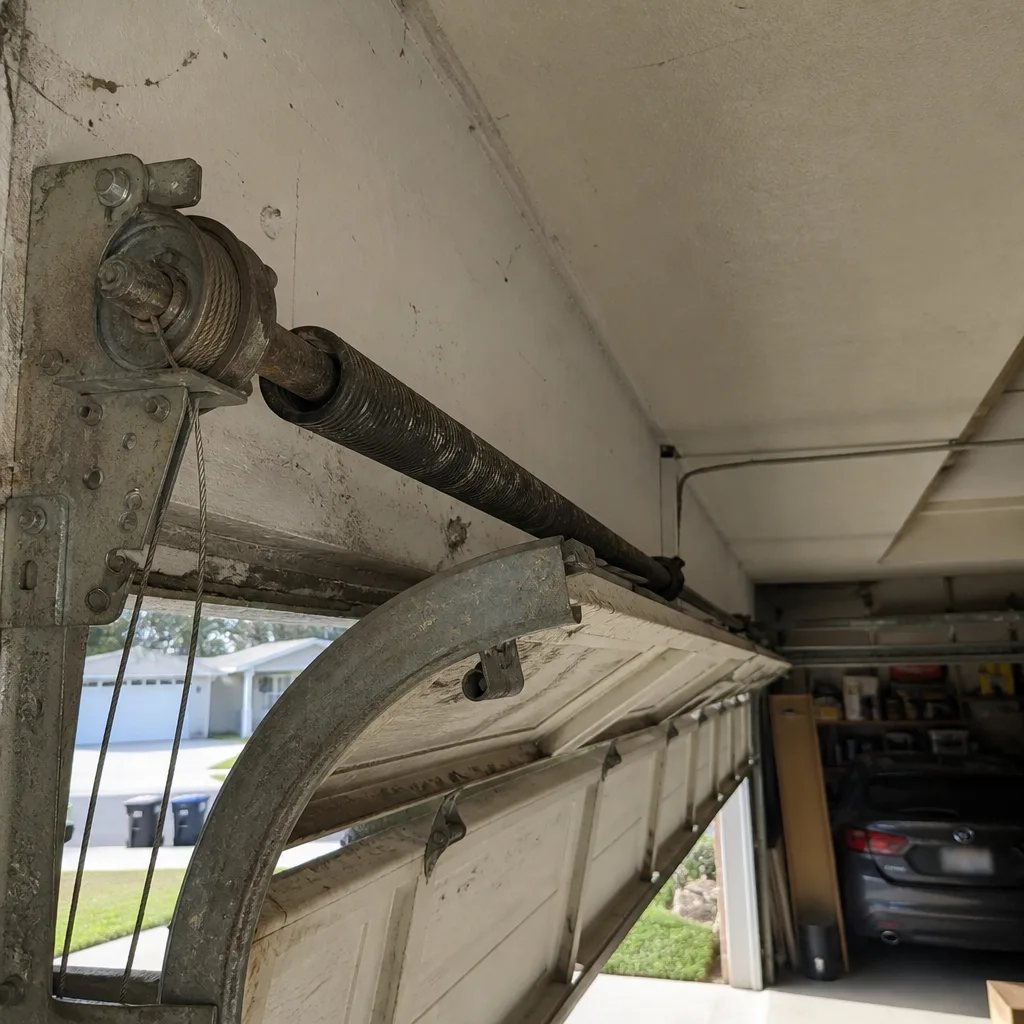 Before
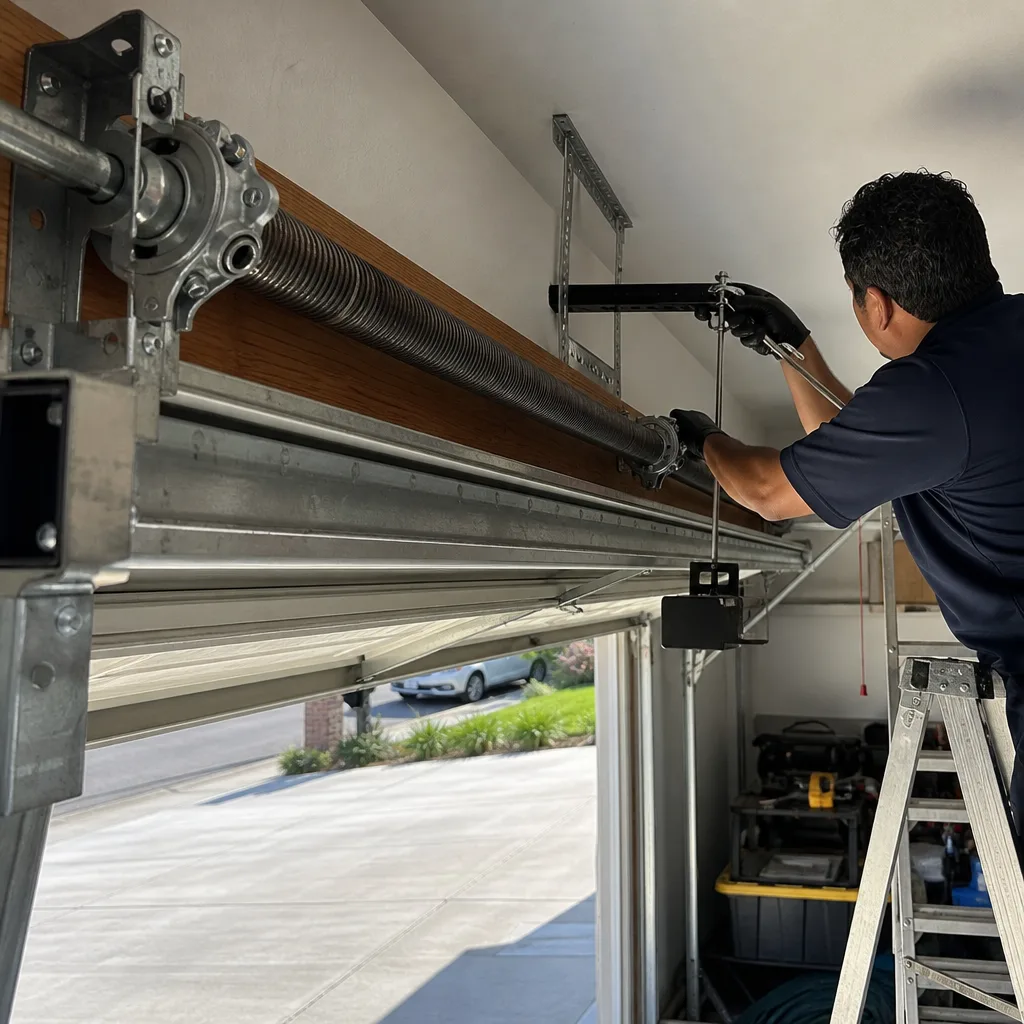 After
After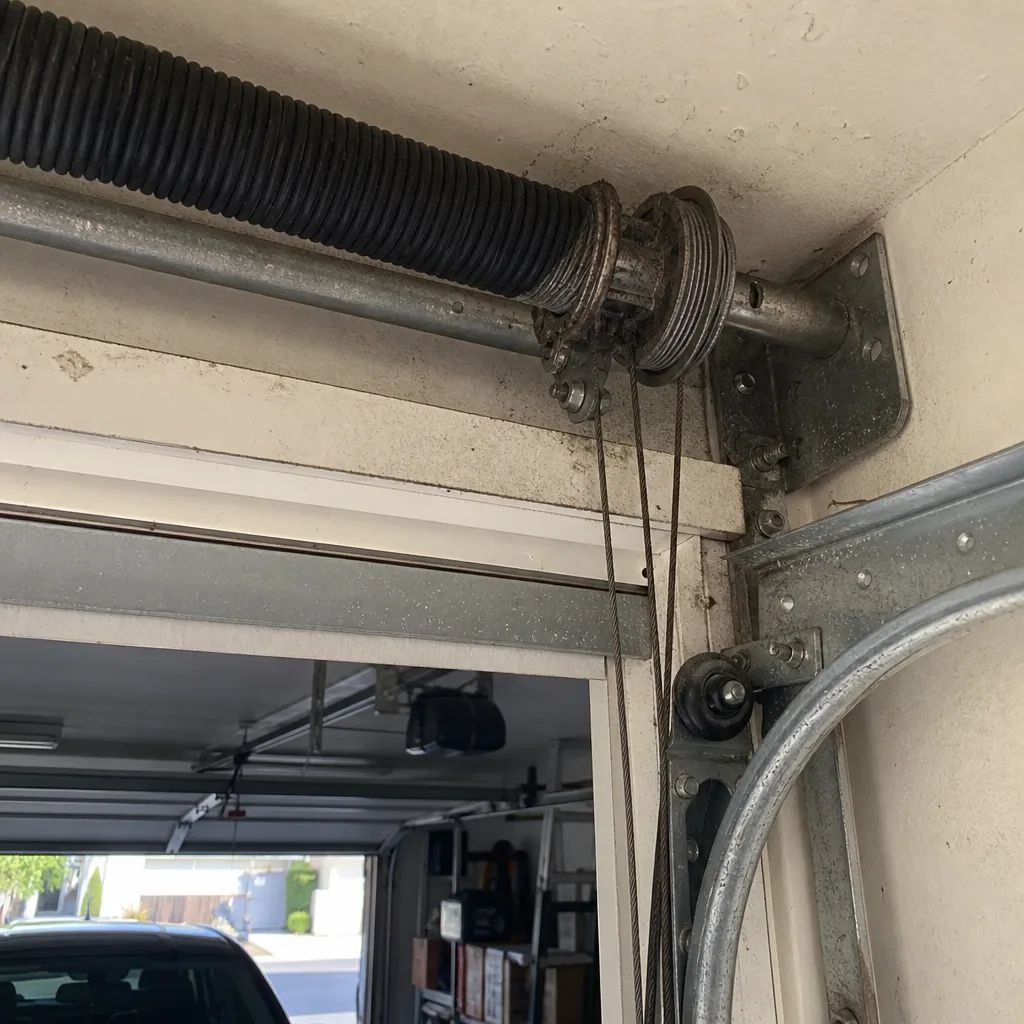 Before
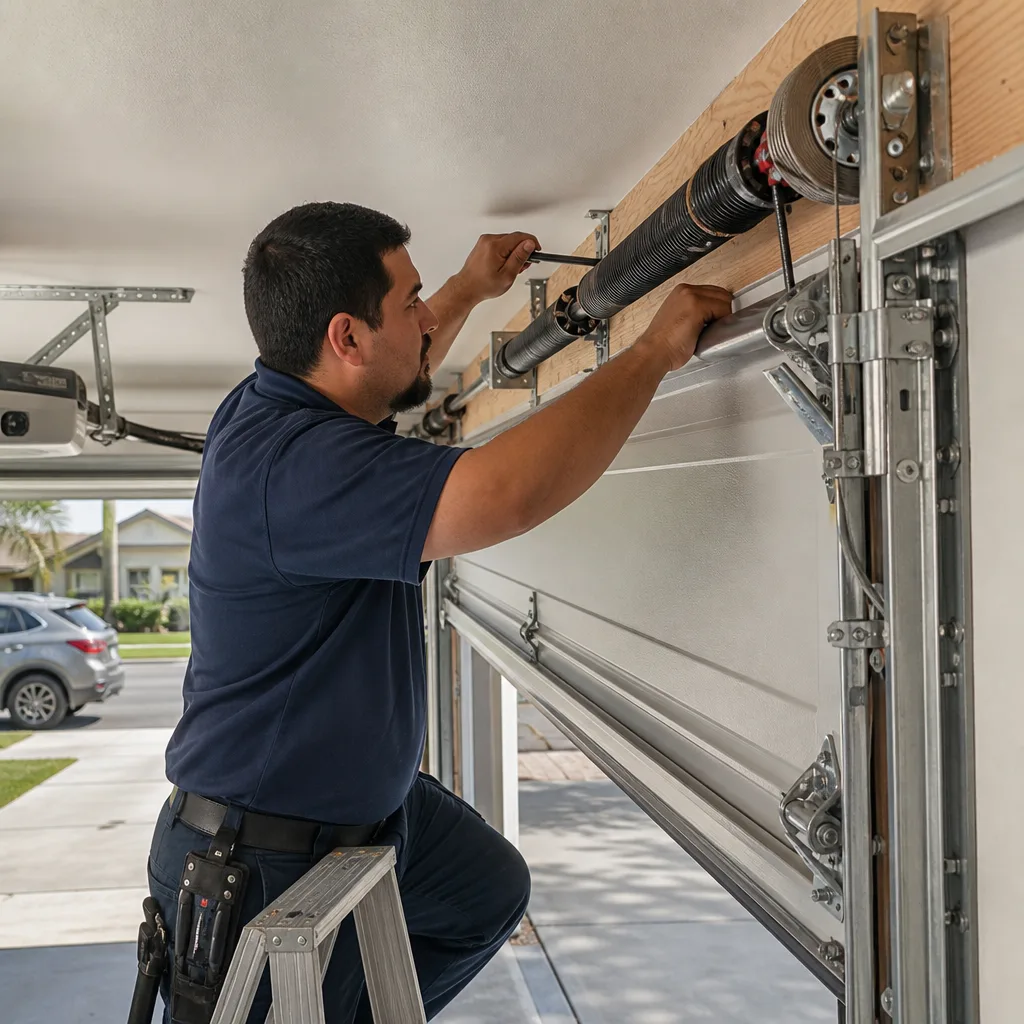 After
AfterSeasonal Garage Door Care for Huntington Beach: Year-Round Homeowner’s Guide
Huntington Beach homeowners tend to think the mild coastal climate lets them skip garage door maintenance. No snow, no ice, no sub-zero cold snapping cables. That assumption is exactly why so many doors fail here in October, when the first real temperature swing after five months of flat heat finally stresses a spring that’s been quietly losing tension since June. Huntington Beach doesn’t have four seasons in the traditional sense, but it does have four distinct stress periods for garage doors, and most people miss all of them because they don’t announce themselves until something breaks. This guide names those stress periods, explains what’s happening to your door during each one, and gives you the specific task that prevents the failure. For a deeper dive into year-round care, see our Complete Guide to Garage Door in Huntington Beach.
Quick Answer
Seasonal garage door care in Huntington Beach comes down to four tasks: wiping and re-coating hardware during June Gloom (May-July), checking track clearance during late-summer heat (August-September), inspecting the bottom seal during Santa Ana wind season (October-December), and clearing threshold drainage during winter rains (January-March). Do these four things plus a monthly auto-reverse safety test, and you’ll catch most failures before they strand a car in the driveway or send a door off its track. Not sure whether to tackle this yourself or call a pro? Our DIY vs Professional Garage Door guide breaks down the decision for Huntington Beach homeowners. The whole routine takes under an hour per season and costs less than $30 in supplies.
Table of Contents
- June Gloom: The Marine Layer and Your Door Hardware (May-July)
- Late Summer Heat: Wood Composite Panels and Track Bind (August-September)
- Santa Ana Wind Season: Bottom Seal and Wind Load Stress (October-December)
- Winter Rain Events: Threshold Water and Cable Corrosion (January-March)
- The One Task That Crosses Every Season: The Auto-Reverse Safety Test
- Spring Cycles: The Maintenance Item Nobody Counts
- Common Mistakes to Avoid
- When to Call a Professional
- Frequently Asked Questions
- The Bottom Line
June Gloom: The Marine Layer and Your Door Hardware (May-July)
Every morning from late May through July, the marine layer rolls in off the Pacific and sits over Huntington Beach until mid-morning. The air temperature drops, humidity climbs past 80%, and a fine film of condensation settles on every exposed metal surface. Your garage door hardware is outside for all of it. The hinges, the roller stems, the spring coils, the cable anchors, the track brackets. Every single morning, for six to eight weeks straight, those components get damp. Then the sun burns through around 11 a.m., the metal heats up, the moisture evaporates, and the cycle repeats the next day.
That repeated wet-dry cycling is how surface rust starts. It doesn’t look dramatic. A little orange dust on a spring coil. A faint brown line where the roller stem meets the hinge. Most homeowners don’t notice it until the rust has eaten deep enough to pit the metal, and by then a $12 roller has become a $180 track repair. In Huntington Beach, the neighborhoods closest to the water, like the area near the pier and the homes south of Hamilton Avenue toward the wetlands, get the worst of it because the marine layer hangs there longest.
What to Do During June Gloom
- Wipe down the hardware once a week. Use a clean rag to remove condensation and salt residue from hinges, roller stems, spring coils, and cable anchors. Salt is in the air here, even a few blocks from the surf, and salt accelerates rust far faster than plain water.
- Re-coat bare or lightly rusted spots with a rust-inhibiting spray. A product like Boeshield T-9 or a basic silicone lubricant works well. Don’t use WD-40 as a long-term protectant; it displaces water but evaporates within days and leaves metal exposed again.
- Lubricate the moving parts. White lithium grease on the hinges and roller stems, and a garage-door-specific lubricant on the spring coils. Do this in the late morning after the condensation has burned off, not while the metal is still wet.
- Check for rust tracking along the bottom of the track. If you see brown staining running down the vertical track, that’s water pooling in the bottom bracket. It needs to be dried, cleaned, and sealed before it reaches the cable anchor.
We’ve been doing garage door repair in Huntington Beach since 2004, and June Gloom is the single most common time we see otherwise healthy doors start their slow decline. The homeowner never notices because the door still opens fine. It’s only in October, when a rusted roller finally jams or a corroded cable anchor lets go, that the June neglect shows up.
Late Summer Heat: Wood Composite Panels and Track Bind (August-September)
August and September in Huntington Beach bring sustained daytime temperatures in the 85 to 95°F range, sometimes higher inland. The sun beats on the west-facing garage doors for six to eight hours a day. If you have wood composite or wood-look panels, which are common on the higher-end homes in neighborhoods like Seacliff and Edwards Hill, those panels absorb heat and expand. Not much, but enough. An eighth of an inch of expansion across a 16-foot door changes the clearance between the panel edges and the vertical track.
When a panel expands and binds against the track, the opener has to work harder to move the door. You’ll hear it. A grinding sound, or a stutter when the door passes a certain point in its travel. The opener motor strains against the resistance, and the gear inside takes the abuse. Most stripped opener gears in Huntington Beach happen in September, and the homeowner almost always blames the opener. The problem was the panel binding the track, not the motor. If the opener is straining, the problem is almost never the opener.
Wayne Dalton and Amarr both make wood-composite and wood-look door lines that are popular in Huntington Beach, and both respond to heat expansion the same way. It’s normal. It’s also preventable.
What to Do During Late Summer Heat
- Run the door by hand. Pull the red release handle and lift the door manually through its full travel. It should move smoothly with consistent effort. If you feel resistance at a certain point, note where. That’s where the panel is binding.
- Check the side clearance. With the door closed, look at the gap between the panel edge and the vertical track on both sides. It should be roughly even from top to bottom. If it’s tighter near the top or bottom, heat expansion or a shifted track is the culprit.
- Tighten the track mounting brackets. Heat cycling loosens the lag bolts that hold the track to the wall. A quarter turn on each bracket bolt often restores the clearance. Don’t over-tighten; the track needs a little room to flex.
- Re-lubricate if you hear grinding. A dry roller against a heated track produces a grinding noise that mimics gear damage. Lubricate first, then test again.
If you don’t catch the binding early, the opener gear eventually strips. A new gear for a Chamberlain or LiftMaster opener runs $180 to $340 installed, and a new opener runs $450 to $700 installed in Huntington Beach. The adjustment that prevents it takes ten minutes and costs nothing. This is one of the few places where annual maintenance genuinely pays for itself.
Santa Ana Wind Season: Bottom Seal and Wind Load Stress (October-December)
Santa Ana winds hit Huntington Beach from late October through December, sometimes earlier. The gusts come down the canyon corridors from the northeast, dry and hot, sometimes sustained at 30 to 40 mph with higher peaks. For a garage door, wind is a structural load. The force pushes against the face of the door, but it concentrates at the bottom section, because that’s where the door meets the ground and where the wind pressure finds its exit point under the seal.
The bottom astragal seal, that flexible rubber strip along the bottom edge of the door, takes the most abuse. It’s the first thing to warp, crack, or pull loose during wind season. When it fails, three things happen. Dust and debris blow under the door into the garage. Rodents find the gap, and a garage is a warm, dry place to nest in December. And the door loses its lower structural support, which means the bottom panel can flex under wind load and eventually twist off its rollers.
Homes in the northern part of Huntington Beach, closer to the open corridors of the Santa Ana wind paths, see this more than homes sheltered by the density of the downtown grid. But every house with a west or south-facing garage door takes wind load during Santa Ana season.
What to Do During Santa Ana Wind Season
- Inspect the bottom seal. Close the door and look along the bottom edge from inside the garage. Daylight coming through anywhere means the seal is compromised. Replace it. A new seal costs $40 to $90 installed and takes an hour.
- Check the side seals. The vertical weatherstripping along the door jambs takes lateral wind pressure. If it’s brittle, cracked, or peeling away from the frame, the wind is working its way around the door and into your garage.
- Tighten the bottom bracket bolts. The bottom brackets anchor the cables and hold the bottom section to the track. Wind load vibrates these bolts loose. Check both sides and snug them up if there’s any play.
- Look for a bow in the door when it’s halfway up. With the door in mid-travel, stand inside the garage and sight along the bottom edge. If it curves, the bottom section has been stressed. That’s a repair that should be addressed before the next heavy wind event.
A garage door is 200 pounds riding on two springs. Respect it. When the wind pushes that 200 pounds sideways, every component between the door and the floor feels the load. The seal is your early warning system. If it’s in good shape, the rest of the door is probably fine. If it’s not, something else is usually already on its way out.
Winter Rain Events: Threshold Water and Cable Corrosion (January-March)
Huntington Beach gets most of its annual rainfall between January and March, often in a handful of intense storm events. The rain comes down hard, the ground saturates quickly, and water pools in the flat areas around garage doors. The apron, that concrete slab just outside the door, is supposed to slope away. Older homes, and there are plenty of them in the neighborhoods east of Beach Boulevard, often have aprons that slope toward the door or sit dead flat.
When water pools at the threshold, it finds its way in. Not through a sealed, well-maintained bottom seal, but around it. Through the side seal joints. Through the gaps at the corners. And when water pools inside the garage at the base of the door, it doesn’t dry quickly in the winter. It sits there, and the bottom bracket, the cable anchor, and the lower roller stems sit in it. That’s how cable anchors rust out and fail during the next heavy wind event or mid-winter cold snap.
Raynor and Craftsman doors both use steel cable anchors at the bottom bracket, and both corrode the same way when they sit in standing water. The cable itself, under full spring tension, eventually pulls free of the anchor. That’s a violent failure that can send the cable whipping loose and drop the door unevenly onto the track. It’s preventable with about ten minutes of attention during the rainy season.
What to Do During Winter Rain Season
- Check the threshold after every heavy rain. Look for standing water inside the garage at the base of the door. If you find it, find where it’s coming in. Usually the bottom seal corners or a side seal that’s pulled away from the jamb.
- Sweep standing water out immediately. Don’t let it evaporate over several days. The longer the cable anchor sits wet, the faster it corrodes. A garage broom and thirty seconds solves it.
- Inspect the bottom bracket and cable anchor monthly during winter. Look for rust blooms, white powdery corrosion, or any sign the cable is fraying where it meets the anchor. If you see any of it, call a professional.
- Improve the apron slope if you can. If the concrete apron is flat or backward-sloping, a thin grout lift or a rubber threshold ramp can redirect water away. It’s a simple fix that protects the entire bottom section of the door.
If you need a new bottom seal or side seal before the next storm, we stock the common sizes and can have it done same-day in most cases. The Otto’s Garage Door home page has our contact info, and a live person answers the phone around the clock.
The One Task That Crosses Every Season: The Auto-Reverse Safety Test
Every garage door opener manufactured since 1993 has an auto-reverse mechanism. It’s designed to detect resistance when the door is closing and reverse direction. The sensors at the bottom of the track create an invisible beam; if anything breaks that beam while the door is moving down, the opener reverses. This is the only maintenance item on your garage door that has a direct line to someone getting hurt. It’s also the one most people never test.
The test takes two minutes. Place a roll of paper towels on the ground under the door, in the center of the opening. Close the door using the wall button or remote. The door should reverse within two seconds of contacting the roll, or before contacting it at all if the sensor beam is working. If the door crushes the roll and doesn’t reverse, the auto-reverse is not working, and the door is a safety hazard. Same test with the sensor beam: close the door and wave your hand through the beam before the door reaches it. The door should reverse immediately.
Do this test once a month, every month, no matter the season. In Huntington Beach, where garages often double as playrooms, workshops, and surfboard storage, kids and pets cross the door threshold constantly. The auto-reverse is the difference between a close call and a real injury. If the test fails, stop using the opener and call a professional the same day.
Other Year-Round Checks Worth Doing Monthly
- Listen to the door. A squeak means a dry roller. A grind means track bind or a failing gear. A pop means a spring losing tension. Your ears catch problems before your eyes do.
- Watch the door move. It should travel smoothly without jerking, hesitating, or wobbling. Any of those means something is loose or wearing.
- Inspect the cables. Frayed cables don’t fail gracefully. They snap under full spring tension and can cause serious injury. Never touch a cable under tension yourself; call a professional.
- Check the opener force setting. If you have to hold the wall button down to make the door move, the force setting is wrong or the door is binding. Either way, it needs attention.
The auto-reverse test is the one thing on this list that I ask every Huntington Beach homeowner to do, not just my customers. It’s free, it’s fast, and it matters more than any other maintenance item on the door. If your test fails, call us at (714) 650-8648 and we’ll get it fixed before it gets used again.
Spring Cycles: The Maintenance Item Nobody Counts
A torsion spring has a finite number of open-and-close cycles before it fails. Standard springs are rated for 10,000 cycles. Heavy-duty springs go to 25,000 or 50,000. Most homeowners never think about this because the spring doesn’t look worn until the day it breaks. It just sits there, quietly losing a little tension with every cycle, until one day it snaps and the door won’t open, or worse, drops suddenly.
In Huntington Beach, the average home cycles the garage door four to six times a day. Commuters leaving in the morning and returning at night, kids coming and going, surfers grabbing boards from the garage. That’s roughly 1,500 to 2,200 cycles a year. A standard 10,000-cycle spring lasts four to six years under that load. If your spring is older than that and you’ve never replaced it, you’re on borrowed time.
I count spring cycles the way you count tire miles. I’ll tell you what’s left on yours. The spring doesn’t give a warning when it’s about to go, but the math does. If you know when it was installed and roughly how many times a day the door cycles, you know when it’s due. In our experience, most Huntington Beach homeowners replace springs reactively, after the failure, because the failure is always a surprise. It doesn’t have to be.
Spring Maintenance in the Coastal Climate
- Lubricate the spring coils quarterly. A garage-door-specific lubricant on the torsion spring keeps the coils from binding and extends the spring’s life by reducing friction-related wear. Not WD-40; an actual garage door lubricant.
- Look for gaps or distortion in the coils. A spring that’s about to fail often shows a slight separation in the coil spacing near one end. If you see it, schedule a replacement before it snaps.
- Never adjust or replace a torsion spring yourself. The spring is under enough tension to remove fingers or cause a fatal injury. This is genuinely dangerous work. A trained professional needs to do it.
- Consider upgrading to a higher-cycle spring when you replace. A 25,000-cycle spring costs about 20% more than a standard spring and lasts two and a half times longer. For a door that cycles heavily, it’s the better value.
This is the one topic where I’ll be direct: high-tension garage door springs are the most dangerous component in a home, and no YouTube video prepares you for working on one safely. The torsion in a wound spring is enough to shatter bone. It’s not a DIY job, ever. If your spring is showing its age, call us at (714) 650-8648 and Otto or one of his crew will handle it.
Common Mistakes to Avoid
- Using WD-40 as a lubricant. WD-40 is a solvent and water displacer, not a long-term lubricant. It evaporates within days and leaves metal dry. Use white lithium grease on hinges and rollers, and a garage-door-specific lubricant on springs and tracks.
- Ignoring a noisy door because it still opens. Noise is the first symptom of every major garage door failure. By the time the door stops working, the problem that started as a squeak has typically progressed into a full component failure, and the repair is three times the cost.
- Replacing the opener when the door is the problem. If the opener is straining, the problem is almost never the opener. A binding door, a failing spring, or a dry roller makes the opener work harder. Fix the door first, and the opener often returns to normal.
- Waiting until June Gloom is over to address rust. The marine layer season is when rust takes hold. If you see rust blooming on any hardware during May through July, treat it that week. Waiting until August means the rust has already pitted the metal, and pitted metal needs replacement, not cleaning.
- Never testing the auto-reverse. The auto-reverse safety mechanism is the only thing standing between a closing door and a serious injury. If you test nothing else, test this. Once a month, every month.
- Letting standing water sit at the threshold after a rain event. The cable anchor sits in that water and corrodes. Sweep it out the same day. It takes thirty seconds and prevents a $300 repair.
- Assuming the mild climate means no maintenance is needed. Huntington Beach’s climate is mild in temperature, but harsh in consistency. Salt air, marine layer moisture, Santa Ana wind load, and seasonal rain all stress the door in ways that cold-weather climates don’t. The maintenance is different, not less.
When to Call a Professional
Call a professional when the spring breaks, or when you see a gap or distortion in the coil before it breaks. Call when the cable is frayed, because cables fail suddenly and under violent tension. Call when the door comes off its track, when the bottom section is bowed from wind load, or when the auto-reverse test fails. Call if the door suddenly feels heavier to lift by hand, because that means the spring has lost tension and the full weight of the door is now on the opener and your shoulders. Any of these situations is beyond safe DIY territory.
Otto’s Garage Door offers free estimates in Huntington Beach. Call (714) 650-8648 for a free estimate, and a live person answers, day or night.
If you have a written estimate from another company, bring it in. We’ll give you a free second opinion, with no trip charge inside the county. The name on the van is the name on the invoice and the name on the license. It’s been that way since 2004.
For a new door, we work with garage door installation in Huntington Beach across all the major brands, Clopay, Amarr, and Wayne Dalton included, and we quote the job before we start and hold the price when we arrive.
Frequently Asked Questions
A DIY seasonal maintenance routine costs $20 to $40 per season in supplies: a can of white lithium grease, a garage-door-specific lubricant, a rust-inhibiting spray, and a clean rag. For a full breakdown of what different repairs and services run in this market, see our Garage Door Cost Breakdown for 2026. A professional tune-up in Huntington Beach, which includes lubrication, hardware tightening, track alignment, and a safety test, typically runs $85 to $150. At Otto’s Garage Door, we’ll quote the tune-up price before we come out, and the price doesn’t change once we arrive. Call (714) 650-8648 for an exact quote.
Yes, it does, and more than most people realize. The salt in the air mixes with the marine layer moisture that settles on your hardware every morning during June Gloom, creating a salt-water solution that accelerates rust. This affects homes within a few miles of the coast, not just beachfront properties. Regular wiping and re-coating of hardware during the May through July period is the single most effective thing you can do to prevent corrosion-related failures.
Once a year is the baseline, and the best time to schedule it in Huntington Beach is October, before Santa Ana wind season and the winter rain events. The service should include spring inspection, cable inspection, hardware tightening, track alignment, lubrication, and an auto-reverse safety test. If your door cycles more than five times a day, or if you live within a mile of the water, twice-a-year service is a better interval.
A standard torsion spring is rated for 10,000 cycles. The average Huntington Beach home cycles its door four to six times a day, which works out to 1,500 to 2,200 cycles a year, meaning a standard spring lasts four to six years. A heavy-duty spring rated for 25,000 cycles lasts ten to fifteen years under the same use pattern. If you don’t know how old your spring is, the technician who performs your next tune-up can estimate its remaining life by looking at cycle wear.
In most cases, yes, but with caution. A track that’s slightly out of alignment can often be corrected by tightening the mounting brackets and checking the side clearance. However, if the track has been pulled away from the wall, if the door has partially derailed, or if the problem is the result of a spring or cable issue, it’s not a DIY fix. A misaligned track under spring tension can release suddenly. If you’re not sure, call (714) 650-8648 and we’ll walk you through what you’re looking at.
Rusted bottom bracket cable anchors from standing water at the threshold. It happens during the winter rain season, sits invisible under the door for months, and then fails catastrophically during the next heavy wind event or when the door is opened under load. The cable anchor is cheap to replace when caught early, but the failure it causes is not. Check your threshold drainage after every heavy rain, and sweep standing water out of the garage the same day.
For garage door opener service, spring replacement, or any repair where you want a straight answer, call garage door opener professionals in Huntington Beach at (714) 650-8648. We answer the phone, we quote the job on the call, and we hold the number when we show up.
The Bottom Line
Seasonal garage door care in Huntington Beach isn’t about dramatic overhauls or expensive equipment. It’s about knowing when your specific climate stresses the door and doing the small thing that prevents the big failure. Wipe and re-coat hardware during June Gloom. Check track clearance during late-summer heat. Inspect the bottom seal during Santa Ana wind season. Sweep threshold water during winter rains. Test the auto-reverse every month. Each task takes minutes, costs almost nothing, and saves you from the $300 to $700 repairs that happen when the seasons catch up. If you’d rather have someone else do it, Otto’s Garage Door has been serving Huntington Beach since 2004, with free estimates, upfront pricing, and a live person on the phone around the clock. For more guides & resources on keeping your door running smoothly, visit our blog. Call (714) 650-8648.
Written by Otto Reinhardt, Owner at Otto’s Garage Door, serving Huntington Beach since 2004.