
Last updated September 10, 2026
Full 25-point door and opener safety check with every visit - springs, cables, rollers, tracks, and your LiftMaster or Chamberlain opener included
You get a price before we start. It does not change when the truck arrives.

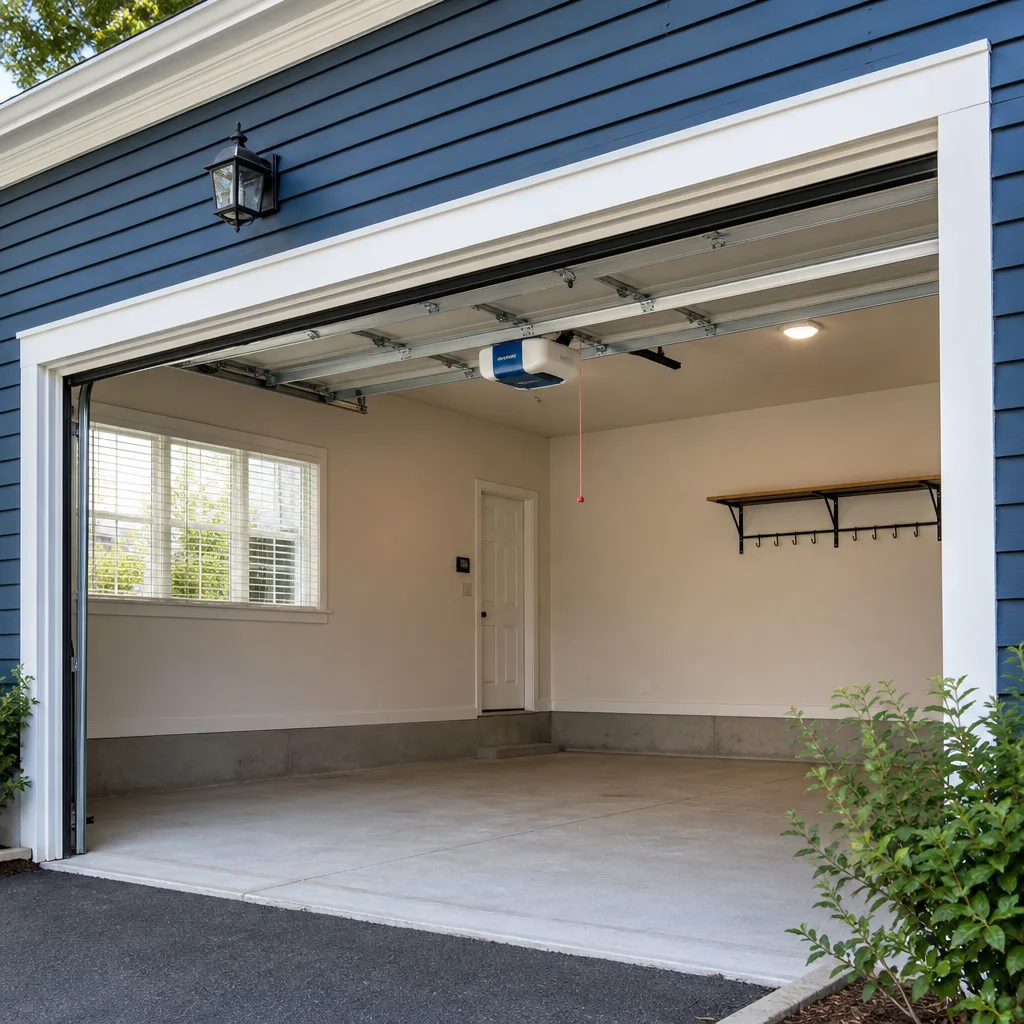
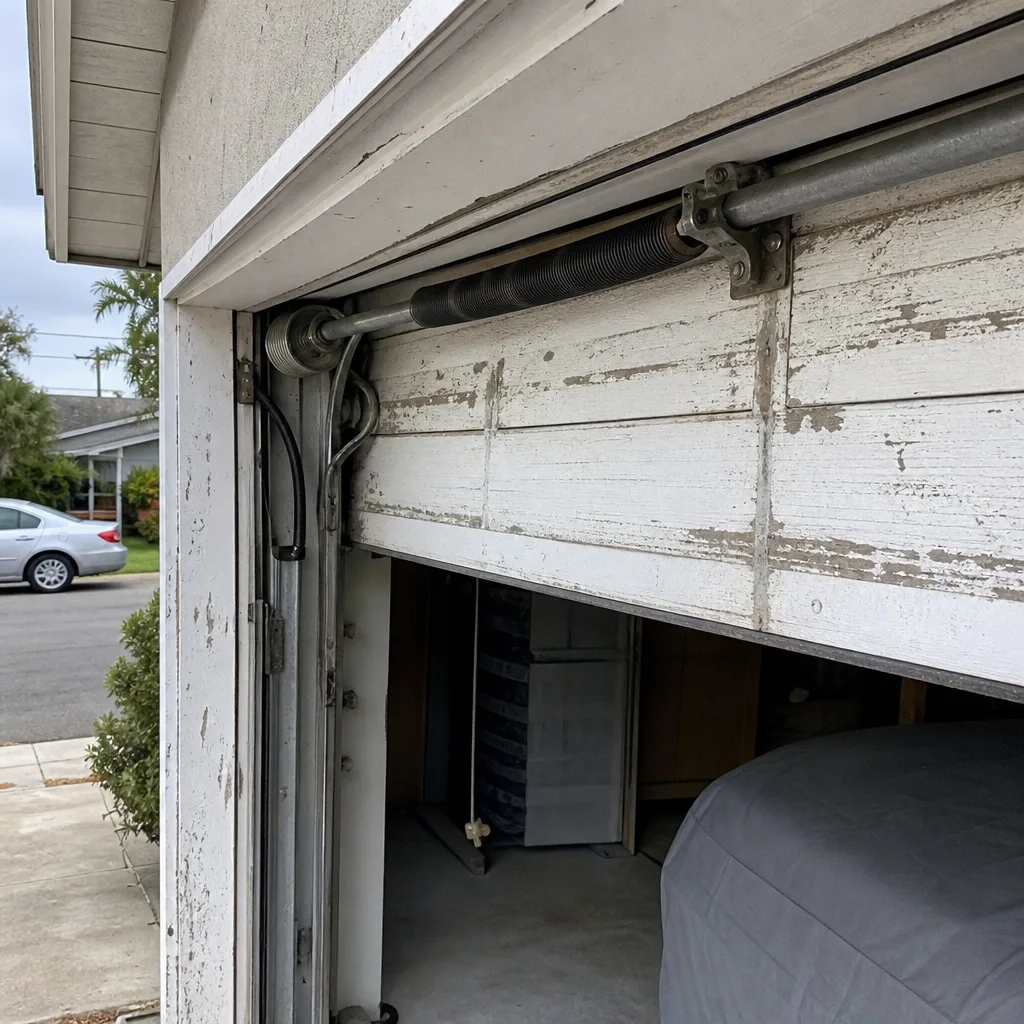 Before
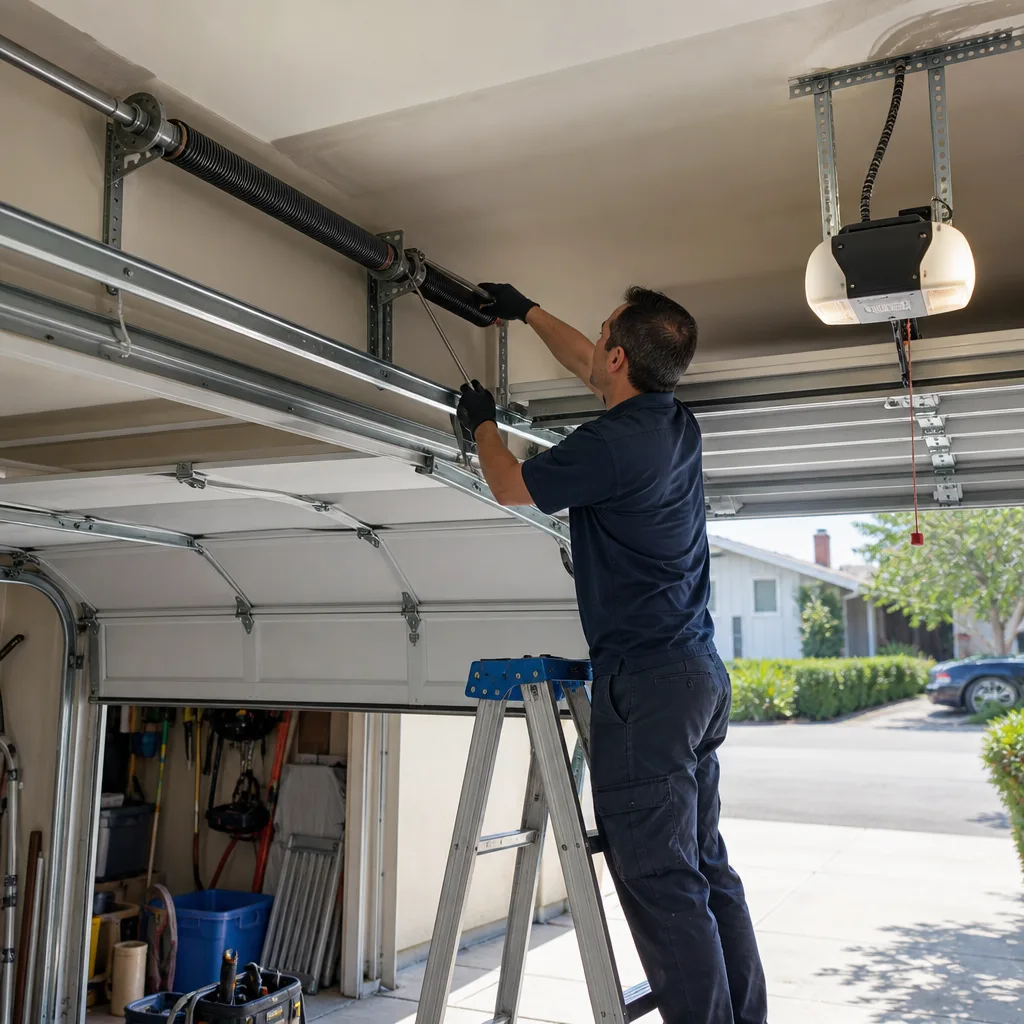 After
After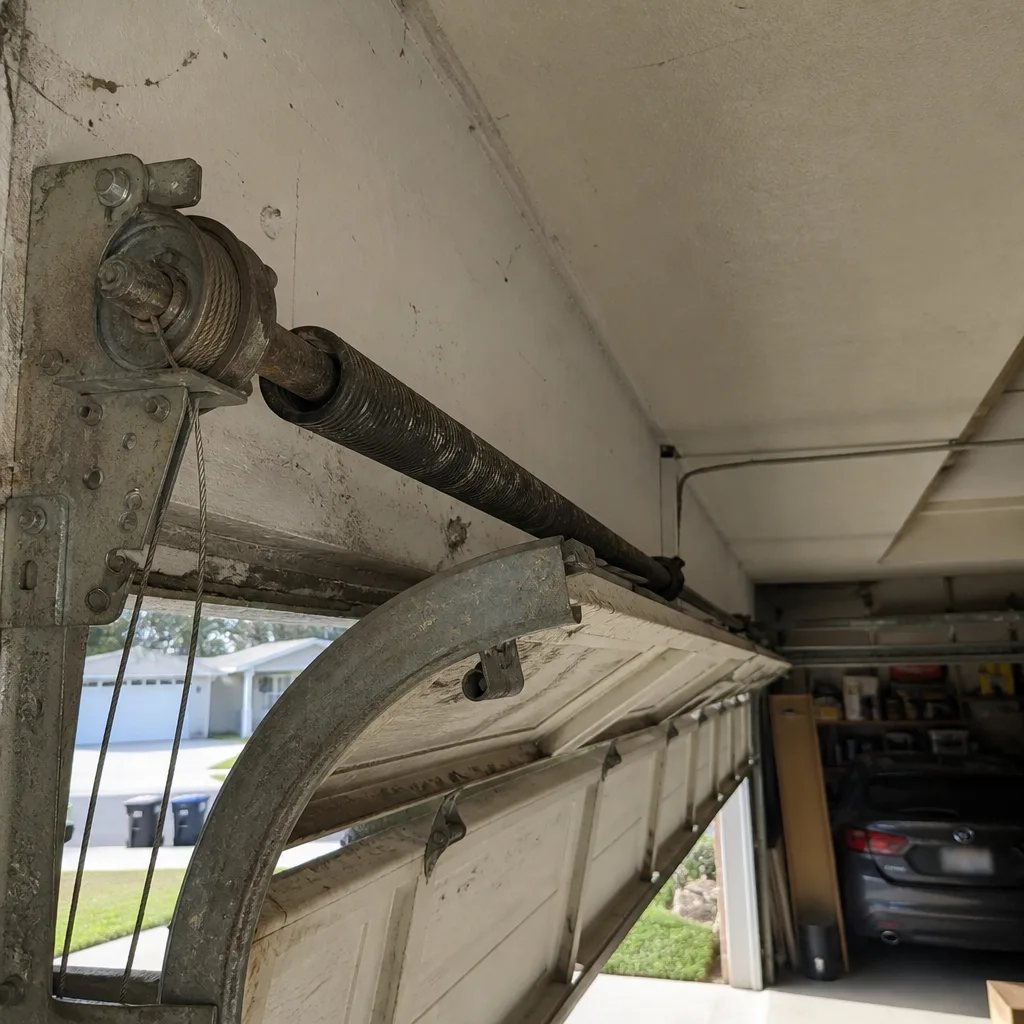 Before
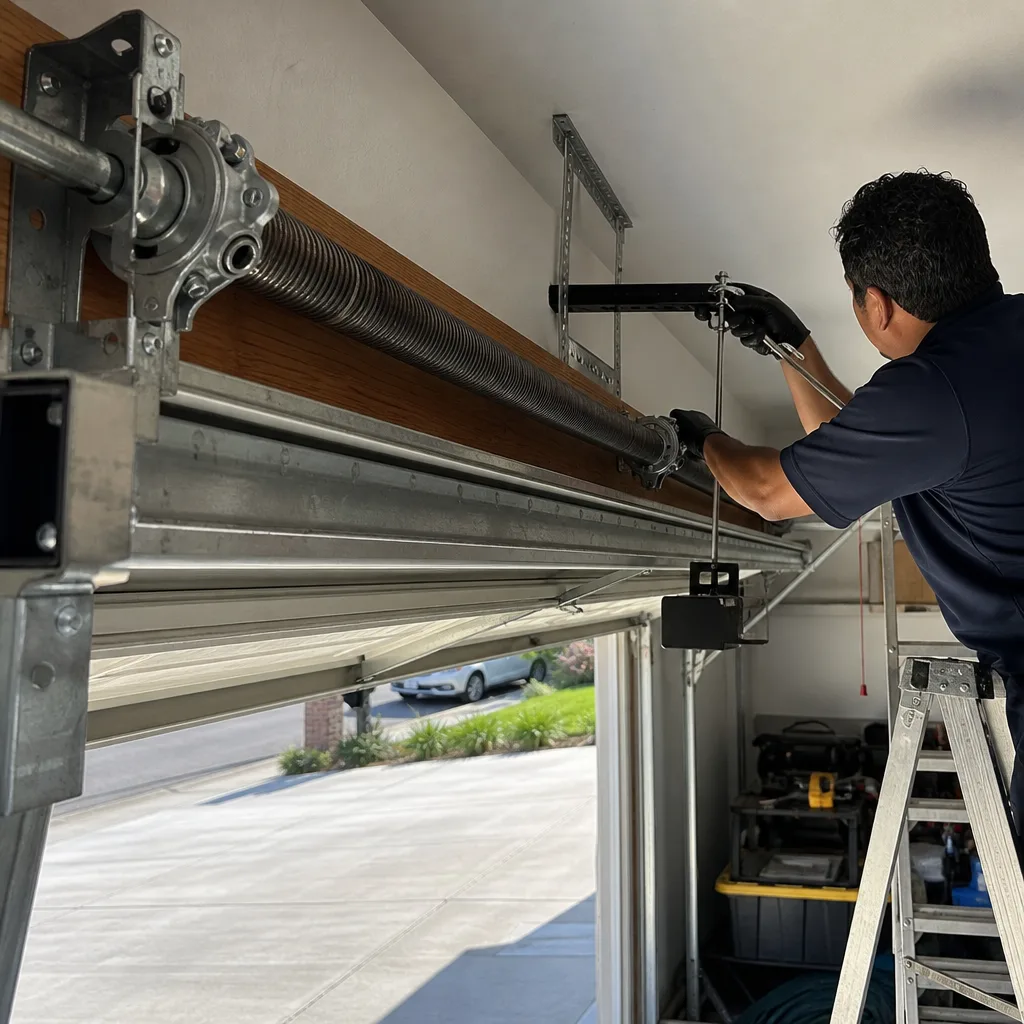 After
After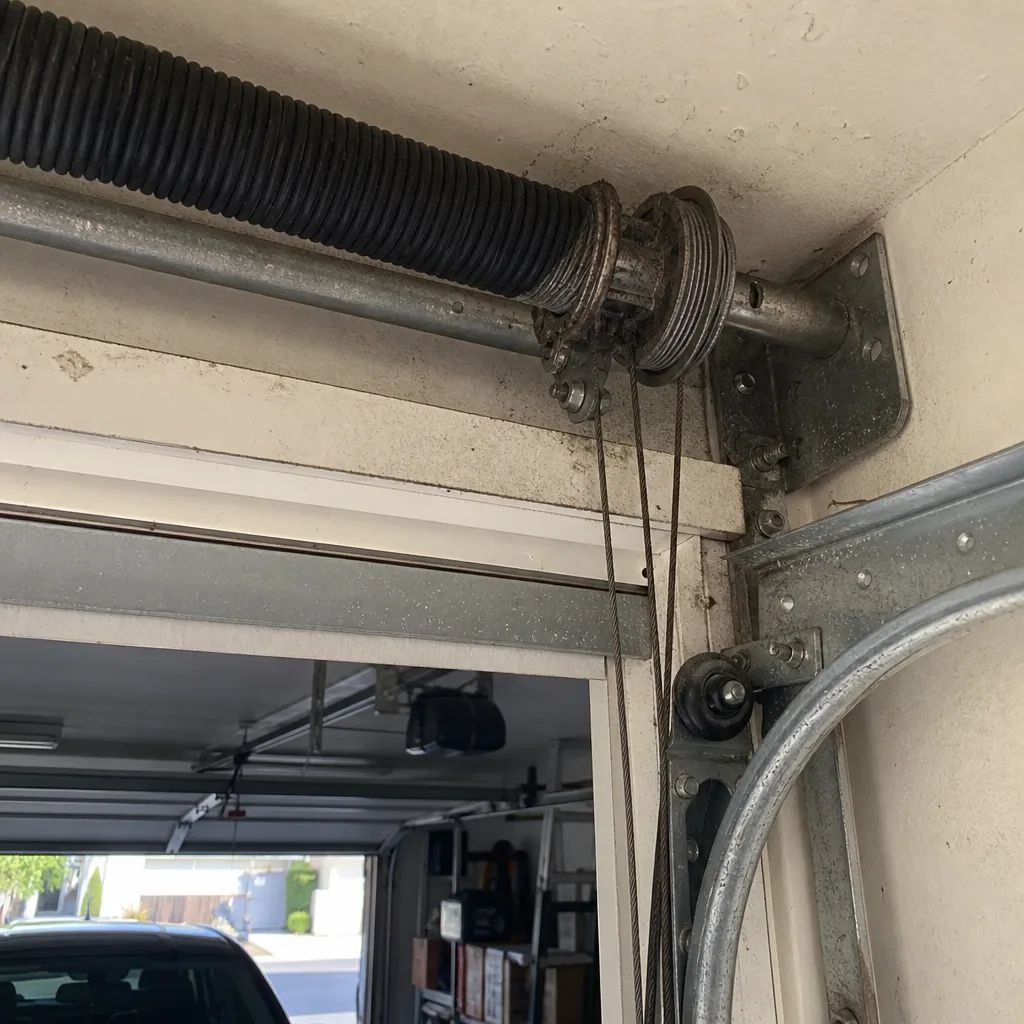 Before
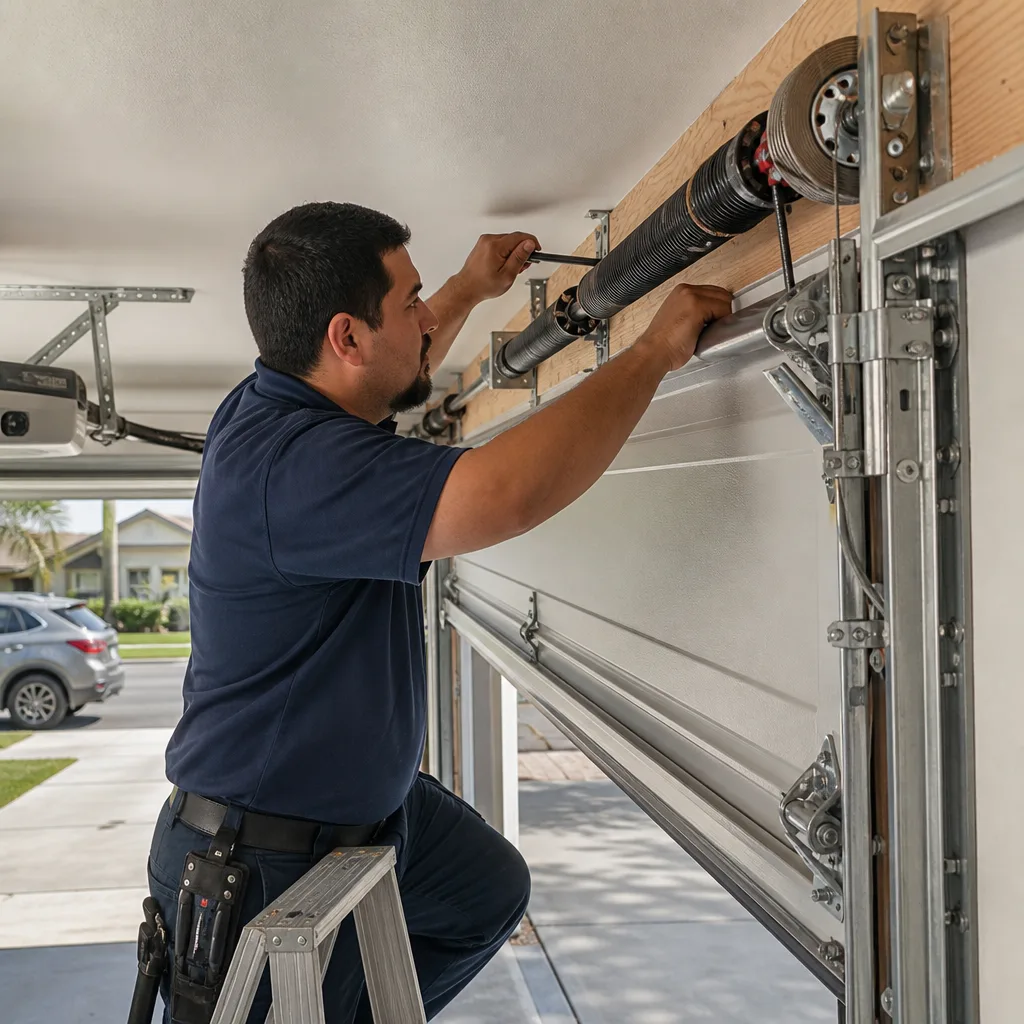 After
AfterGarage Door Warning Signs: A Huntington Beach Homeowner’s Reference Guide
That grinding noise your door makes on the way up isn’t the opener “breaking in.” It’s a roller that’s lost its nylon sleeve and is now metal-on-metal against the track. Every single cycle scores that track deeper, and by the time you hear it clearly, you’re usually weeks past the cheap fix and heading toward the expensive one. Most garage doors in Huntington Beach don’t fail suddenly. They telegraph the failure for weeks with sounds, movements, and visual cues that homeowners simply never learned to read. This guide teaches you to read them. By the time you finish, you’ll know which warning signs mean “keep an eye on it” and which ones mean “don’t touch that door until a professional gets here.”
Quick Answer
The most common garage door warning signs in Huntington Beach are grinding or squealing noises from worn rollers, a door that hesitates at the same point in its travel, visible rust or calcium streaking on coastal-exposed hardware, and a single loud bang that means a torsion spring just snapped. Grinding, popping, and visible cable wear are all signals to stop using the door and call a pro. Squealing and slow operation are warnings you can often address within a week or two before they become emergencies. The bottom line: your door talks to you every time it opens. Most people just haven’t learned the language.
Table of Contents
- The Noise Map: What Five Specific Sounds Actually Mean
- Coastal Visual Signs: Salt Air, Rust, and What Huntington Beach Does to Hardware
- Movement Warnings: Hesitation, Jerking, and Uneven Travel
- The Single Loud Bang: What to Do the Moment a Spring Lets Go
- Urgent vs. Watch-It: A Triage Guide for Every Warning Sign
- The 30-Second Inspection: Catch 80% of Problems Before They’re Emergencies
- Common Mistakes to Avoid
- When to Call a Professional
- Frequently Asked Questions
- The Bottom Line
The Noise Map: What Five Specific Sounds Actually Mean
Garage doors speak in a limited vocabulary. In our experience across Huntington Beach, the same five noises account for the overwhelming majority of service calls. Here’s exactly what each one means, what’s causing it, and how urgent it actually is. A door is 200 pounds riding on two springs. Respect it. And listen to it.
1. Grinding (metal-on-metal)
Grinding is the sound of a roller that has lost its nylon sleeve. The sleeve is the plastic ring that sits between the metal roller wheel and the track. When it wears through or cracks off, you get bare steel rolling on bare steel. Every cycle scratches both surfaces. The fix is replacing the rollers, and it’s straightforward. The cost comes if you ignore it long enough that the track gets scored. A scored track wears out new rollers fast, and in severe cases the door can bind against the damaged section. In Huntington Beach, where salt air accelerates corrosion on any exposed metal, a roller that’s already lost its protective sleeve degrades even faster than it would inland.
Urgency: Moderate. Don’t panic, but schedule a repair within a few weeks. If the grinding is accompanied by visible metal shavings on the track, treat it as urgent.
2. Squealing (high-pitched, rhythmic)
Squealing is usually a dry bearing or a hinge pin that needs lubrication. The sound follows the door’s travel and often gets worse in cold weather or after months of disuse. The good news: if it’s genuinely just a lubrication issue, it’s the cheapest thing on this list to fix. The bad news: most homeowners reach for WD-40, which is a solvent, not a lubricant. It strips whatever grease was there and leaves the metal drier than before. What you want is a white lithium grease or a silicone-based garage door lubricant applied to the hinges, rollers (the bearing part, not the track), and springs. If you’ve lubricated and the squeal persists, it’s a roller bearing that’s no longer holding grease internally. That roller is done. Replace it.
Urgency: Low to moderate. Lubricate first. If the noise doesn’t improve within a day or two, you have a roller failure in progress.
3. Popping (sharp, irregular, often from the springs)
Popping sounds from the spring area are the sound of coil bind or a spring that’s starting to lose its internal tension. Torsion springs store enormous energy, and a popping noise is often the spring shifting slightly on the shaft as it unwinds. Think of it like a loose guitar string being plucked. This is not a normal noise, and it’s not something to fix yourself. Torsion springs are under enough tension to cause serious injury or death if they release while you’re working on them. Popping is your door telling you the spring is starting to fail. Call a professional. When we hear popping on a service call in Huntington Beach, we usually find a spring that’s lost 30-40% of its rated life and is well past the point where every additional cycle is a gamble.
Urgency: High. Stop using the door and call a professional. A popping spring is a spring about to let go.
4. Rattling (loose metallic chatter, constant during travel)
Rattling is usually hardware that’s worked itself loose: hinge bolts, track brackets, or the bolts holding the opener rail to the ceiling. Coastal homes in Huntington Beach get more of this than inland homes because the salt air causes faster corrosion on fasteners, which makes them more likely to back out. The sound is annoying but rarely dangerous in itself. What’s dangerous is ignoring it, because a door with loose track brackets can shift a quarter-inch out of alignment, and then the rollers start binding, and then you’ve got a much more expensive problem. Get a socket set or call us out. Tightening hardware is a five-minute job that prevents a $500 repair. If you’re not comfortable doing it yourself, any garage door professional will include hardware tightening as part of a basic tune-up.
Urgency: Moderate. Tighten what you can reach safely. If the rattle persists, have the track inspected for alignment.
5. The Single Loud Bang
The loud bang is not a noise the door makes while running. It’s the noise of a torsion spring snapping all at once. It sounds like someone hit the inside of your garage wall with a sledgehammer, and it often happens when the door is closed, usually in the middle of the night when temperature changes put maximum stress on the spring metal. When a spring snaps, the door loses roughly half its lifting force. The opener will strain, the door will go up crooked or not at all, and the remaining spring is now carrying the full load it was never designed to handle alone. Do not operate the door. Do not pull the emergency release and try to lift it by hand unless you’re strong enough to lift 150-200 pounds of dead weight, and even then, the goal is just to get a vehicle out if you absolutely must. Then leave the door alone and call for repair. More on this in the section below.
Urgency: Critical. Do not use the door. Call immediately. This is the one that can’t wait until morning.
Coastal Visual Signs: Salt Air, Rust, and What Huntington Beach Does to Hardware
Huntington Beach sits close enough to the Pacific that the air itself is an active ingredient in your garage door’s aging process. Salt mist and humidity do three things to garage door hardware that inland homeowners never see. First, the salt accelerates rust on bare or scratched metal. Second, the constant moisture cycle causes paint to separate from the steel panel underneath. Third, the combination creates mineral deposits that look like ordinary household dust but are actually signs of active corrosion. Here’s what to look for.
Bubbling Paint on the Bottom Panel
If the paint on your door’s bottom panel is bubbling, blistering, or flaking in patches, that’s not a paint quality issue. It’s moisture working its way into the steel panel from the inside out. The bottom panel is the first place this happens because it’s closest to ground moisture and any water that pools at the base of the door after a rain or a sprinkler that hits the door. In Huntington Beach, the salt in the air makes the process faster. Once the paint barrier is broken, the steel underneath starts corroding, and a corroded panel loses structural integrity. A door with a rusted-through bottom panel is weaker, less secure, and can fail catastrophically if the panel buckles under its own weight. If you catch the bubbling early, you can sand, prime, and repaint, and you’ll buy years of additional life. If you wait until the rust shows through, that panel is probably done.
White Calcium Streaking on the Track
White, chalky streaks running down the vertical track are calcium and mineral deposits left behind as moisture evaporates from the metal surface. This is extremely common on garage doors in Huntington Beach, especially on tracks that face the ocean or get morning condensation. By itself, calcium streaking is cosmetic. But it’s a diagnostic signal: if you’re seeing calcium deposits, that track is regularly wet, and a regularly wet track is a track that’s rusting where you can’t see it. Wipe the track with a dry rag and check for orange or brown discoloration underneath. If you find rust on the track surface, that’s a wear point that accelerates roller deterioration. A rusty track can often be cleaned and treated if caught early. Left alone, it eventually causes the roller to bind, and then you’re replacing track sections.
Orange Dust at the Cable Drum
This is the one most homeowners miss entirely. Look up at the torsion bar above your closed door. At each end, you’ll see a cable drum: a round spool that the lift cables wind around. If you see what looks like fine orange dirt or rust-colored dust accumulated on top of the drum or on the cable itself, that’s not normal household dust. That’s the cable shedding material. The lift cables on a garage door are steel cables under constant tension. When they start to rust, they fray, and the fraying sheds tiny rust particles onto whatever is below. If you see orange dust at the cable drum, your lift cables are in the process of failing. When a cable fails, the door comes down unevenly, and if it happens while the door is up, the door can slam shut. Call a professional immediately if you see this. Do not attempt to inspect or touch the cables yourself. They are under enough tension to sever fingers.
What Huntington Beach homeowners should do: Once every season, take two minutes to look at the bottom panel, the track, and the cable drums-our Seasonal Garage Door Care for Huntington Beach walks you through exactly what to check. Coastal homes in this city need their garage door hardware checked more often than inland homes, because the environment is actively working against you. If you’re not sure what you’re looking at, call a local shop and ask for a visual inspection. Most reputable companies in Huntington Beach will do it free or cheap, and it’s the cheapest insurance you’ll ever buy.
Movement Warnings: Hesitation, Jerking, and Uneven Travel
A garage door that moves smoothly and consistently is a door telling you the springs are balanced, the track is aligned, and the rollers are doing their job. A door that doesn’t move smoothly is giving you diagnostic information every single cycle. You just have to know how to read it. Here’s the key thing most homeowners get wrong: when a door hesitates or jerks, they blame the opener. If the opener is straining, the problem is almost never the opener. The opener is just the motor. The door is the weight. And if the motor is straining, it’s because the weight isn’t balanced or the movement isn’t smooth. Here’s what to watch for.
Hesitation at the Same Point Every Cycle
A door that pauses, slows, or stutters at the same point in its travel every single time is not having an opener problem. It’s having a track or roller problem at that specific spot. Something at that point in the track is binding. It could be a section of track that’s been knocked slightly out of alignment, a roller that’s flat-spotted, a hinge that’s rusted stiff, or a track section that’s accumulated enough debris to create resistance. The fact that it happens at the same point every time is your diagnostic clue: the problem is location-specific. The fix is to identify what’s at that location and correct it. A door that hesitates at the same spot is usually a straightforward repair if caught early. If you let it go, that resistance point becomes a wear point, and the wear point becomes a failure point.
In Huntington Beach, one common cause of location-specific hesitation on older doors is salt corrosion inside the track at a specific point, almost always where morning condensation collects. The track rusts from the inside, the roller hits that rough spot every cycle, and eventually the roller itself starts to degrade. If your door hesitates and you live close to the water, have the track inspected for internal corrosion.
Door Goes Up Unevenly or Sags to One Side
If your garage door goes up with one side leading and the other lagging, or if it looks visibly slanted when open, you have a spring balance issue, a cable issue, or both. The two springs on a standard door are matched to share the load equally. When one spring is tired or broken, the other side of the door has to work harder, and the door tilts. A cable that’s frayed or slipping off its drum produces the same symptom. This is a mechanical problem, not an opener problem, and it’s a warning sign that needs attention before the uneven load causes a cable to snap or the door to come off its track. Do not use a door that’s going up unevenly. The forces involved are enough to cause serious property damage or injury if the door lets go.
Door Slams Shut or Closes Too Quickly
A properly balanced door, when released from the opener and lowered by hand, should stay where you put it. It should not fall under its own weight, and it should not be difficult to pull down. If your door slams shut or feels unusually heavy to lift manually, the spring tension is wrong. Torsion springs lose tension as they age, and a spring that’s nearing the end of its life can’t hold the door balanced anymore. I count spring cycles the way you count tire miles. Most standard springs are rated for 8,000 to 12,000 cycles, which translates to roughly 7-10 years of normal use for an average household. If your door is 15 years old and still on original springs, they’re living on borrowed time. A door that slams shut is telling you the springs are done. Replace them before they snap.
The Single Loud Bang: What to Do the Moment a Spring Lets Go
Here’s the scenario: it’s 9:30 at night, you’re home, the garage door is closed, and you hear what sounds like a gunshot from inside the garage. That’s a torsion spring letting go. It is the single most common catastrophic failure on residential garage doors, and it happens to thousands of homeowners in Huntington Beach every year. Here’s what happens next and exactly what to do.
What just happened: A torsion spring is a tightly wound coil of steel mounted on a bar above the door. It stores the energy that makes a 200-pound door feel light. Over thousands of cycles, the metal develops microscopic fatigue cracks. Eventually, one of those cracks lets go, and the entire spring unwinds in a fraction of a second, releasing all its stored energy as sound and vibration. That’s the bang.
What to do immediately:
- Do not operate the door. Don’t press the opener button. Don’t pull the emergency release. Don’t try to lift the door. The second spring on the door is now carrying the full weight by itself, and it’s not rated for that. If you operate the door, you risk breaking the second spring and having the full weight come down uncontrolled.
- If a vehicle is trapped inside, assess whether you genuinely need it right now. If you do, you may be able to lift the door manually with significant effort, but only if you’re physically capable of lifting 150-200 pounds. Do not attempt this if you have any doubt. If you can wait, wait.
- Call a professional who answers the phone at night. This is the moment when a 24/7 local shop matters. Not a national call center. Not an answering service. A live human being in Huntington Beach who can tell you what it will cost, when they can be there, and then actually show up. Otto’s Garage Door answers the phone around the clock, including nine at night when a spring lets go and your vehicle is sealed inside.
- Ask for a clear quote before anyone touches the door. A torsion spring replacement is a standard job with standard pricing. You should get the price on the phone, and that price should not change when the truck arrives. If a company won’t quote it over the phone, find one that will.
One more thing: do not stand under the door and do not let kids or pets into the garage until the spring is replaced. The remaining spring is under maximum stress, and it’s more likely to fail now than it was before the first one gave out.
Urgent vs. Watch-It: A Triage Guide for Every Warning Sign
Not every warning sign is an emergency. Some are slow-burn maintenance items you can schedule at your convenience. Others are safety risks that mean the door should not be used until a professional has fixed the problem. Here’s the triage list, from “fix it now” to “watch it for a month.” This is the difference between a $150 repair and a $1,500 repair, and sometimes the difference between a working door and an injured family member.
Do Not Use the Door (Critical Safety Issues)
- Broke torsion spring (the loud bang): Door is unbalanced and dangerous. Call immediately.
- Frayed or snapped lift cable: A broken cable means the door can come down uncontrolled. Call immediately.
- Visible orange dust at the cable drum: Cables are actively failing. Call immediately.
- Door off its track: If the rollers have come out of the track, the door is unstable. Do not attempt to force it back onto the track. Call immediately.
- Popping noise from the springs: Spring is starting to fail. Stop using the door and call.
Schedule Within a Week or Two (Developing Problems)
- Grinding noise from a worn roller: Will eventually score the track and cost more to fix.
- Door hesitating at the same point every cycle: Track or roller issue at a specific location. Get it checked before it becomes a bigger problem.
- Rattling hardware: Loose bolts and brackets are a quick fix that prevents track misalignment.
- Visible rust on the track: Needs cleaning and treatment before it causes roller binding.
Watch and Monitor (Maintenance Items)
- Bubbling paint on the bottom panel: Plan to strip, prime, and repaint before rust gets through the steel.
- White calcium streaking on the track: Cosmetic, but monitor underneath for rust development.
- Mild squealing that goes away after lubrication: This was a maintenance issue. Keep an eye on it and lubricate seasonally.
- Slow opener response: Could be an opener issue, but often it’s just cold weather or a low battery in the remote. Try the wall button before calling anyone.
Here’s the thing about the “watch it” category: a warning sign never fixes itself. It either stays the same, which means it’s stable but still a problem, or it gets worse, which means it’s a bigger problem. The door doesn’t heal. So when you see something on this list, the best move is to note it, photograph it if that helps you remember, and then actually address it. Huntington Beach homeowners who stay ahead of the small stuff almost never have the big stuff happen.
The 30-Second Inspection: Catch 80% of Problems Before They’re Emergencies
The dirty secret of the garage door industry is that most emergency calls didn’t have to be emergencies. The signs were there for weeks. This 30-second inspection catches the vast majority of developing problems. Do it once a month. It takes less time than scrolling through your phone while you wait for the coffee maker.
The 30-Second Inspection
- Look at the door, closed, from inside the garage (5 seconds). Is the door even? Any visible tilt? Any gaps between the bottom of the door and the floor that aren’t the same from one side to the other? A door that’s flush and even is a door with balanced springs.
- Look at the cables (5 seconds). The lift cables run from the bottom brackets on each side up to the drums above. Are both cables taut? Is there any visible fraying or rust-colored dust at the drums? Both cables should look identical. If they don’t, something’s wrong.
- Look at the rollers (5 seconds). Follow the track from bottom to top. Are all the rollers still in the track? Do any of them look flattened, cracked, or missing their nylon sleeve? A roller with a visible gap between the metal wheel and the track is a roller that’s lost its sleeve.
- Listen to the door for one full cycle (10 seconds). Open the door and close it. Smooth and quiet is good. Grinding, squealing, popping, or rattling is a diagnostic clue. Refer back to the noise map above.
- Glance at the springs (5 seconds). Are both springs intact? No gaps in the coil, no visible separation, no rust accumulation? If one spring looks different from the other, that’s a problem.
That’s thirty seconds. You’ve just checked the five systems that cause the overwhelming majority of garage door failures. If you find something, you now know how urgent it is based on the triage guide above. And if you’re not sure, call a local pro and ask. Any reputable garage door company in Huntington Beach will answer your questions over the phone for free, or you can browse our more guides & resources to learn more. We do it every day.
Common Mistakes to Avoid
- Spraying WD-40 on everything. WD-40 is a solvent, not a lubricant. It strips real grease and leaves the metal unprotected. Use white lithium grease or a silicone-based garage door lubricant on hinges, rollers, and springs. Never lubricate the track itself: it creates a slick surface that makes the rollers slide instead of roll, and that causes flat spots.
- Ignoring a noise because “it still works.” Your door still works right up until the moment it doesn’t. The noise is the warning. Every month you ignore a grinding roller, you’re adding cost to the eventual repair.
- Attributing everything to the opener. The opener is a motor. It lifts the door when the door is balanced and moving smoothly. When a door hesitates, slams, goes up crooked, or won’t open at all, the springs, cables, track, and rollers are more likely culprits than the motor. Diagnose the door, not the opener.
- Trying to DIY a torsion spring replacement. Torsion springs carry enough tension to cause catastrophic injury or death. This is not a “watch a YouTube video and give it a shot” project. Professional spring replacement is the one repair where the cost of hiring a pro is always less than the cost of getting it wrong. We’ve seen the aftermath of DIY spring work. It’s never worth it.
- Waiting for the door to fully fail before calling. The most expensive garage door repairs in Huntington Beach are the ones where the homeowner knew something was wrong for months and then the door finally gave out in a way that cascaded: a snapped cable damaged the track, the door came down and bent a panel, and the spring that could have been replaced for $250 ended up being part of a $1,200 repair. Early intervention is always cheaper.
- Assuming salt air only affects the outside of the door. Huntington Beach’s coastal climate works on the inside of the door too: the springs, the cables, the track, the hinges. A door that looks fine from the street can be rotting from the inside. If you live close to the water, your inspection frequency should go up.
- Using the door as a test for whether you should call. “Let me just run it one more time and see if it sounds better.” No. The door is not a diagnostic tool. If it’s making a concerning noise, running it more just accelerates the damage. Call and describe what you’re hearing. A good shop will tell you over the phone whether it’s urgent.
When to Call a Professional
Call a professional the moment you hear a loud bang from the spring area, see a frayed cable or orange dust at the drum, notice the door going up unevenly, or hear popping from the springs. Those are the four conditions that can turn into a safety hazard without warning. Call within a week or two for grinding, persistent squealing after lubrication, hesitation at a specific point, rattling hardware, or visible rust on the track. Those are manageable now and expensive later. And call if you’ve been told by an inspector, a home warranty company, or a neighbor that something looks off, even if the door seems fine. Second opinions are cheap. Garage door failures are not. If you’re in Huntington Beach and you want a professional assessment, Otto’s Garage Door offers free estimates and a Free Second Opinion on any written estimate, no trip charge inside the county. Call (714) 650-8648.
Frequently Asked Questions
Garage door spring replacement in Huntington Beach typically runs between $180 and $340 for a standard single-door torsion spring replacement, including the spring and labor, depending on spring size and door weight. If you replace both springs at the same time, which we recommend because they wear at roughly the same rate, expect $250 to $500 total. That’s the price range for a standard residential door. Custom doors, oversized doors, or doors with unusual spring configurations will run higher. Any company that won’t quote you a specific price over the phone before sending a truck is not a company you want in your driveway. Get the number upfront. Call (714) 650-8648 for an exact quote: the price we give you on the phone is the price on the invoice.
You can use it for a short period if the grinding is the only symptom and the door is otherwise moving normally, but every cycle is doing incremental damage to both the roller and the track. The longer you run it, the more expensive the fix becomes. If the grinding is accompanied by metal shavings on the track, visible shake or wobble, or any hesitation, stop using the door and call a professional. In coastal cities like Huntington Beach, where salt air accelerates the wear on damaged metal surfaces, a grinding roller degrades faster than it would inland. The smart move is to replace worn rollers within a couple weeks of first hearing the noise.
Standard torsion springs are rated for 8,000 to 12,000 cycles, which translates to roughly 7 to 10 years for a typical household that opens and closes the door three to five times a day. Huntington Beach’s coastal climate can shorten that life somewhat because salt air accelerates corrosion on the spring surface, and a corroded spring fails earlier. If your door is more than 10 years old and still running original springs, you’re on borrowed time. The good news is that spring replacement is a straightforward job at a predictable price, and replacing them before they snap means you’ll never be the person dealing with a dead door at 11 at night.
Cold temperatures cause metal components to contract, which can make an existing alignment issue more pronounced and a dry bearing more audible. Damp conditions, common in Huntington Beach, especially in the morning and during the June gloom season, cause surface rust to form on exposed steel, which roughens the surface and increases friction. A door that’s quiet on a warm, dry afternoon but noisy on a cold, damp morning is giving you an early warning that the hardware is starting to degrade. Lubricating the moving parts with a proper garage door lubricant may reduce the noise temporarily, but if you’re hearing it consistently during damp weather, have the rollers and hinges inspected for corrosion.
No. When one of the two torsion springs breaks, the remaining spring is carrying the full weight of the door, which it is not designed to do. That remaining spring is now under significantly more stress than normal, and it is more likely to fail. If it does, the door can come down hard enough to damage vehicles, property, or people. Do not operate the door on one spring. Do not pull the emergency release and try to run the door manually unless you absolutely must get a vehicle out and you’re physically capable of handling the full weight. Call for professional repair as soon as possible. This is a critical safety issue.
For most homes in Huntington Beach, an annual visual inspection is sufficient, and you can do the 30-second inspection described above once a month yourself. If your home is within a mile of the ocean, or if your garage faces west and takes direct salt mist from the prevailing breeze, bump it up to twice a year for a professional look at springs, cables, and track condition. The salt air at the coast puts your door hardware on an accelerated aging schedule, and more frequent inspections are the cheapest way to keep up. Most garage door companies in Huntington Beach offer free or low-cost inspections, and catching a problem during a routine check is always cheaper than catching it when the door fails.
The Bottom Line
Your garage door tells you when it’s in trouble. The grinding roller, the popping spring, the uneven travel, the orange dust at the cable drum: these are all signals that were visible or audible weeks before the failure. Learn to read them, and you’ll almost never face a surprise breakdown. Do the 30-second inspection monthly. Treat the urgent signs as urgent and the watch signs as scheduled. And when you need a professional in Huntington Beach, find one who answers the phone with a real person, quotes the job over the phone, and puts the price in writing before any work starts. That’s how it should work. The name on the van should be the same name on the invoice and the same name on the license. Otto’s Garage Door has been serving Huntington Beach since 2004, and every job comes with the 90-Day Done Right Promise in writing. Call (714) 650-8648 for a free estimate. If you need garage door repair in Huntington Beach, we’re the local shop you’ll see again on Saturday. For new door installation or opener service, we handle those too. Ask anyone on your street: we’ve been in this county since 2004, and Otto is a palindrome. Reads the same from either end, same as the door.
Written by Otto Reinhardt, Owner at Otto’s Garage Door, serving Huntington Beach since 2004.